

Month: September 2025
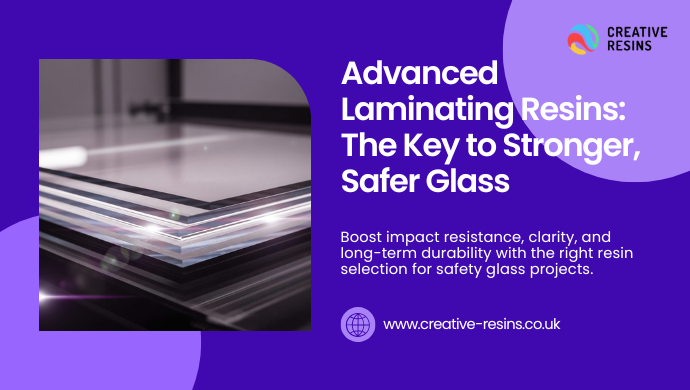
Why Advanced Laminating Resin Selection Is the Game-Changer Your Safety Glass Projects Need
Most manufacturers don’t give their laminating resin much thought. They choose based on price, availability, or what they’ve always used. But if your safety glass ever fails prematurely, delaminates, or doesn’t meet performance standards, it might be time to look a little closer, specifically at one often-overlooked factor: advanced laminating resin selection.
What if your glass manufacturing process could enhance safety performance instead of just meeting minimum requirements? Let’s dive into the science behind why strategic laminating resin selection could be the secret to superior safety glass that stands the test of time.
⚡ Understanding Glass Laminating Resin Requirements for Safety Applications
Safety glass manufacturing represents one of the most demanding applications in the glazing industry. Your material choices don’t just affect quality, they directly impact human safety and structural integrity.
Think about it: every automotive windshield, architectural safety panel, and security barrier depends on the invisible bond between glass layers. That bond? It’s entirely dependent on your laminating resin performance.
Modern safety glass applications span everything from car windshields to skyscraper facades. Each demands precise material specifications where your resin choice influences impact resistance, optical clarity, and decades of reliable performance.
Here’s the reality: understanding the critical performance factors that separate professional-grade systems from commodity alternatives enables you to optimize product quality while ensuring compliance with international safety glass standards.
⚡ Critical Adhesion Properties for Glass Laminating Resin Performance
The foundation of effective safety glass lies in achieving permanent cross-bonding between glass layers. But here’s what most people don’t realize: not all laminating resins are created equal.
Creative Resins’ laminating systems are engineered with adhesion promoters to ensure permanent bonding even under UV exposure and temperature extremes. Research from the Glass Manufacturing Industry Council shows that properly prepared glass surfaces can achieve bond strengths exceeding 3,000 PSI when paired with high-performance laminating resin systems.
But strength isn’t everything. Your resin also needs:
UV-stable formulations that block over 99% of harmful radiation
Temperature resistance from -40°C to +120°C
Chemical resistance against environmental contaminants
Consistent performance across varying atmospheric conditions
Surface preparation plays a crucial role here. Remove all contamination sources, fingerprints, manufacturing residues, atmospheric deposits, anything that could compromise the resin-glass interface. It’s like preparing a surface for premium paint application: the prep work determines everything.
⚙️ Dimensional Stability and Mechanical Properties in Safety Glass Applications
Here’s where things get fascinating: superior dimensional stability isn’t just a nice-tohave feature,it’s fundamental to long-term safety glass performance.
Any significant volume change during cure introduces internal stress concentrations that compromise performance. High-performance formulations can flex up to 350% without cracking, while maintaining minimal shrinkage during curing. This prevents stress fractures in applications like automotive windshields exposed to freezing winters and scorching summers. That consistency ensures uniform resin thickness throughout your laminated assembly.
The mechanical balance is critical too. Your laminating resin must carefully balance flexibility with rigidity to optimize impact energy absorption. According to International Organization for Standardization data, properly formulated laminated safety glass can absorb up to 40% more impact energy than equivalent thickness tempered glass.
Why? The resin system acts as both structural adhesive and energy dissipator, transferring loads between glass plies while providing controlled failure mechanisms that maintain glazing integrity even after impact damage.
Bonus benefit: Quality glass laminating resin formulations provide significant acoustic performance improvements, reducing noise transmission by up to 40% compared to monolithic glass of equivalent thickness.
⚡Application Techniques for Optimal Glass Laminating Resin Results
Achieving optimal performance requires more than just good materials,you need controlled application protocols that address every variable.
Your manufacturing facility must maintain temperature and humidity within specified ranges. Think of it like baking: the environment affects the final product as much as the ingredients do.
Surface preparation goes beyond basic cleaning:
Specialized treatments that optimize surface energy
Adhesion promoter application when required
Validation through adhesion testing
Consistent procedures across production runs
Bubble elimination represents a critical quality control factor. Entrapped air creates stress concentration points that significantly reduce impact resistance and optical clarity. Professional application systems incorporate vacuum degassing capabilities and controlled application speeds to minimize bubble formation.
Curing process optimization involves staged temperature profiles that promote gradual crosslink development while minimizing internal stress. According to research published in the Journal of Materials Engineering, optimal cure schedules typically involve initial temperature holds followed by controlled ramp rates that accommodate the thermal mass of your assembly.
⚡Environmental Considerations and Long-Term Performance
Weather resistance validation through accelerated aging protocols provides essential data for predicting long-term performance. Standard test methods – UV exposure, thermal cycling, humidity stress testing, help you select appropriate systems for specific climate zones and applications.
Environmental compliance increasingly influences material selection as regulatory frameworks evolve. The good news? VOC-free laminating resin formulations prove that environmental responsibility and superior performance can coexist with proper formulation chemistry.
At Creative Resins, we offer VOC-free laminating resin systems that combine high optical clarity with long-term weather resistance, helping manufacturers meet both performance and environmental targets. Advanced systems that facilitate end-of-life separation enable glass recovery and reprocessing, supporting sustainability initiatives while maintaining safety glass performance requirements.
The bottom line: Lifecycle cost analysis reveals that premium laminating resin systems deliver economic advantages through reduced maintenance and extended service life. Initial material costs may exceed alternatives, but total cost of ownership typically favors high-performance systems that deliver reliable long-term performance.
✨ Advancing Safety Glass Excellence Through Strategic Laminating Resin Selection
Your laminating resin selection represents a critical decision point that influences every aspect of safety glass performance, from initial impact resistance to decades of environmental exposure.
The investment in quality materials and proper application techniques pays dividends through enhanced product performance and reduced warranty claims. Understanding the complex interplay between adhesion properties, dimensional stability, and application parameters enables you to optimize processes for consistent, reliable results.
Professional-grade laminating resin systems deliver measurable advantages in structural integrity, optical clarity, and long-term durability when properly specified and applied according to established protocols.
Creative Resins’ expertise in specialized laminating resin formulations reflects decades of development focused on the unique challenges of safety glass manufacturing. Our technical team understands the critical performance factors that distinguish professional applications from commodity solutions.
Ready to optimize your safety glass manufacturing process?
Contact our technical specialists to discuss your specific laminating resin requirements and discover how our advanced formulations can enhance product quality while streamlining your production operations. Our team provides detailed technical support and application guidance tailored to your unique manufacturing environment.
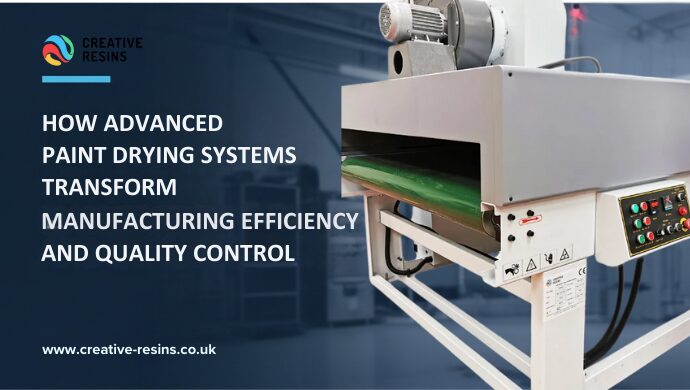
How Advanced Paint Drying Systems Transform Manufacturing Efficiency and Quality Control
Most manufacturers don’t give their paint drying process much thought. They just apply the coating, wait for it to dry, and move on. But if your production line ever faces delays, quality issues, or inconsistent finishes, it might be time to look a little closer, specifically at one often-overlooked factor: advanced drying technology.
What if your manufacturing process could optimize efficiency instead of creating bottlenecks? Let’s dive into the science behind why industrial paint drying systems could be the secret to faster production and superior quality control.
⚡ Understanding Industrial Paint Drying Challenges in Modern Manufacturing
Traditional paint drying is a production bottleneck, which means it slows down your entire manufacturing line and creates costly delays. It’s like a traffic jam that affects everything downstream.
Manufacturing facilities across industries face an increasingly complex challenge: balancing production speed with consistent quality standards while managing operational costs. According to recent industry analysis, manufacturers report that inadequate drying processes contribute to up to 15% of their total production delays.
But and this is key these delays stem from inconsistent curing times, which create quality variations and necessitate costly rework procedures. A manufacturing line with outdated drying methods won’t deliver the same efficiency as one with advanced curing technology.
⚡ The Science Behind Effective Paint Curing Technology
️⚡ Temperature and Airflow Control Fundamentals
Think of paint curing like baking a cake. Too little heat and it won’t set properly. Too much heat and you’ll damage the surface. The right temperature, typically 40-80°C depending on your coating, ensures perfect molecular cross-linking every time.
Advanced paint drying systems deliver:
- ✅ Precise temperature control that prevents thermal damage
- ✅ Controlled airflow circulation that removes solvent vapors evenly
- ✅ Automatic parameter adjustment based on substrate and coating type
- ✅ Up to 40% faster drying times compared to conventional methods
Your drying system should optimize your process, not make it work harder to achieve consistent results.
⚙️ Manufacturing Efficiency Through Automated Drying Equipment
️⚡ Production Line Integration and Throughput Optimization
Here’s where things get exciting.
Creative Resins’ coating technologies are engineered to work seamlessly with advanced drying systems, ensuring consistent results across glass, PVCu, composites, and metals.
Multi-zone drying chambers are game-changers because they handle:
- Flash-off phase (removes initial solvents)
- Intermediate cure (develops coating properties)
- Final drying (completes the curing process)
All in a single pass. Studies show this integration can improve overall production line efficiency by 30-35% while reducing material waste.
And here’s the best part: these systems accommodate diverse substrates simultaneously, flat panels, complex profiles, three-dimensional components, maximizing your equipment utilization without compromising quality.
⚙️ Quality Control Systems and Consistency Measures
️⚡ Monitoring and Documentation for Regulatory Compliance
Your quality control shouldn’t depend on guesswork or operator experience.
Modern industrial drying systems incorporate real-time monitoring that tracks every critical parameter temperature profiles, humidity levels, drying duration, and airflow patterns. This creates detailed audit trails for quality assurance and regulatory compliance.
The results speak for themselves:
- ✅ 60% reduction in quality variations compared to manual processes
- ✅ Elimination of common defects like orange peel and solvent entrapment
- ✅ Repeatable results across all production runs
- ✅ Automatic safety features that protect products and personnel
If you’ve ever dealt with warranty claims or customer complaints due to coating failures, automated drying systems virtually eliminate these costly issues.
⚙️ Substrate-Specific Drying Optimization Strategies
️♻️ Tailored Approaches for Different Materials and Coatings
Not all substrates are created equal. Your drying strategy shouldn’t be one-size-fits-all either.
Glass substrates need specialized heating patterns to prevent thermal stress, critical for safety glass and decorative applications.
Composite doors and PVCu profiles benefit from graduated temperature increases that accommodate different thermal expansion rates between materials.
Metal components often require accelerated flash-off followed by controlled curing to maintain anti-corrosion properties.
Water-based vs. solvent-based systems demand completely different parameters. Advanced systems automatically adjust based on your coating type, ensuring optimal results regardless of formulation complexity.
⚙️ Energy Efficiency and Environmental Considerations
️♻️ Sustainable Drying Technology Solutions
Here’s something most manufacturers don’t know modern drying systems can reduce your energy costs by 20-30% through heat recovery technology.
These systems capture waste heat and redirect it to:
- Preheat incoming air
- Provide supplemental facility heating
- Support other manufacturing processes
Advanced filtration systems don’t just meet environmental regulations; they recover valuable solvents for reuse. It’s like getting nutrients back from your process instead of throwing them away.
Smart sensors monitor production flow, automatically reducing energy consumption during low-demand periods, while still maintaining instant readiness for full capacity.
️⚙️ Implementing Advanced Drying Technology for Competitive Manufacturing Advantage
Strategic investment in industrial paint drying systems delivers measurable returns that compound over time:
- ✅ 25-40% cycle time reduction
- ✅ 60% improvement in quality consistency
- ✅ 20-30% energy cost reduction
- ✅ Substantial competitive advantages in efficiency-driven markets
The selection process requires careful analysis of your specific needs, production volumes, substrate variety, and coating specifications. Success depends on matching system capabilities to operational requirements, not just choosing based on initial cost.
Technical expertise plays a crucial role in maximizing benefits. Companies like Creative Resins provide specialized knowledge and support services that ensure your investment delivers maximum returns through proper implementation and ongoing optimization.
The future of manufacturing competitiveness increasingly depends on advanced process control technologies. Companies that embrace these solutions now position themselves advantageously for long-term success in markets demanding higher quality standards and faster delivery times.
️⚙️ Ready to Transform Your Manufacturing Process?
Your production line deserves better than outdated drying methods that create bottlenecks and quality issues. Choosing advanced paint drying technology is a strategic investment that delivers measurable improvements every day, every production run, all year long.
Don’t let inefficient drying processes hold back your manufacturing potential. Contact Creative Resins’ technical specialists to discover how customized drying solutions can optimize your specific operations and enhance your competitive market position.