
Month: June 2025

Epoxy vs. Polyurethane Paint: Best Choice for Metal Corrosion Protection
Epoxy vs. Polyurethane Metal Corrosion Paint: Which Lasts Longer?
When it comes to protecting metal surfaces from corrosion, choosing the right paint is crucial to ensuring long-lasting durability and minimizing maintenance costs. Corrosion can cause significant damage to metal structures. Epoxy and polyurethane paints are the most common solutions to prevent metal corrosion. Both coatings have distinct advantages.
Let us examine the differences between epoxy and polyurethane metal corrosion paint, comparing their longevity, advantages, and the conditions under which each shines. Understanding these factors can help you make the right choice for your project, whether working in harsh industrial environments, exposed outdoor settings or areas with high UV exposure. The goal is to help you decide which coating is better for your metal surfaces, ensuring they remain protected against corrosion and maintain their aesthetic appeal for years.
Understanding Metal Corrosion and the Need for Protection
Metal corrosion occurs when metals such as steel, iron, and aluminium react with environmental elements like oxygen, moisture, and salt. This reaction leads to the formation of rust, which can weaken the metal and cause it to deteriorate over time. Corrosion is especially problematic for structures like bridges, pipelines, and vehicles, where the integrity of the metal is essential for safety and performance.
Protection against corrosion is necessary to avoid costly repairs, maintain safety, and prolong the lifespan of metal objects. This is where corrosion-resistant coatings like epoxy and polyurethane paints come into play. These coatings create a protective barrier that prevents environmental elements from reaching the metal surface and causing corrosion.
Epoxy Metal Corrosion Paint: An Overview
Epoxy paint is popular for metal corrosion protection due to its excellent adhesion and durability. Made from resins and hardeners, epoxy forms a tough, impermeable coating resistant to moisture, chemicals, and abrasion. This makes it ideal for harsh environments such as marine and industrial settings.
Epoxy paint’s main advantage is its high corrosion resistance. It provides an impenetrable barrier against water and chemicals, making it highly effective in protecting metal surfaces exposed to moisture, oils, or other corrosive substances.
Polyurethane Metal Corrosion Paint: An Overview
Polyurethane paint is another excellent option for protecting metal surfaces from corrosion. It is known for its flexibility and UV stability, making it an ideal choice for outdoor environments. Polyurethane coatings are often used in applications where aesthetic appeal is essential, as they offer a smooth, glossy finish and are available in various colours.
Polyurethane paints are more impact-resistant than epoxy, making them a good choice for areas that may experience physical wear or abrasion. They also excel in UV resistance, meaning they maintain their colour and finish for longer when exposed to sunlight.
Epoxy vs. Polyurethane: Durability and Longevity
Both epoxy and polyurethane paints have strengths. Due to its superior chemical resistance, epoxy typically lasts longer in highly corrosive environments. Its lack of UV stability means it may degrade more quickly when exposed to sunlight, reducing its lifespan.
Polyurethane coatings are ideal for areas with high UV exposure, as they resist fading and deterioration from the sun. While polyurethane may not offer the same level of chemical resistance as epoxy, it tends to last longer in outdoor settings where aesthetics and UV protection are key considerations.
Conclusion
Choosing between epoxy and polyurethane metal corrosion paint ultimately depends on the specific conditions in which the paint will be applied. If you’re working in a highly corrosive environment, epoxy may be a better choice due to its chemical resistance and durability. Polyurethane could provide the longevity and flexibility you need if your metal surfaces are exposed to UV light and need aesthetics and impact resistance. Understanding the unique characteristics of each coating will help ensure your metal surfaces remain protected for years to come. We at Creative Resins provide premium quality Epoxy Paints and Polyurethane Paints at the best prices. Call us now! – 01795 411820
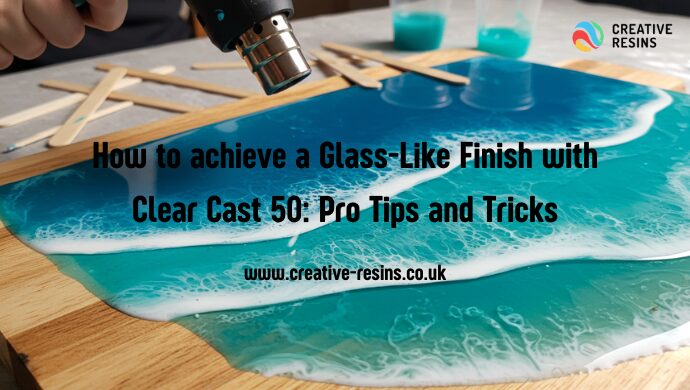
How to achieve a Glass-Like Finish with Clear Cast 50: Pro Tips and Tricks
Achieving a flawless, glass-like finish with casting resins can be a game-changer, whether working on art projects, jewellery making, or even functional items. Clear Cast 50 is a resin that creates a stunning, crystal-clear finish when applied correctly. The perfect glass-like surface not only enhances the appearance of your project but also ensures durability and smoothness that lasts for years.
Achieving this clarity and smoothness is not always as simple as pouring the resin and waiting for it to set. It requires patience, proper technique, and key tricks to avoid imperfections like bubbles, streaks, and uneven surfaces. Let us explore everything you need to know to get the best Clear Cast 50 resin results. From preparation to curing and tips on how to avoid common mistakes, we’ll cover all the crucial steps. Whether you’re a beginner or an experienced crafter, these tips will help you achieve that beautiful, glass-like finish every time.
What is Clear Cast 50 Resin?
CLEAR CAST 50 is a high quality epoxy resin that has a low viscosity allowing for fast air bubble release. It drys water clear and can be cast to a depth of 50mm in a single pour. It will not shrink or crack and can easily have colours or decorative aggregates added to achieve stunning results. is a high-quality epoxy resin popular among artists, crafters, and professionals for its crystal-clear finish. This two-part resin is designed for decorative and functional applications, making it ideal for various projects, from resin art to tabletop coatings. Its unique properties allow it to cure to a glossy, glass-like finish, providing a smooth, durable surface that can withstand everyday wear and tear.
The resin’s self-levelling nature ensures that it spreads evenly across the surface once poured, helping to eliminate imperfections. Clear Cast 50 is known for resisting yellowing, making it an excellent choice for projects that need to maintain clarity over time. You can create professionally finished pieces with an ultra-smooth surface that rivals glass with the proper techniques.
Preparing Your Workspace for Success
Before working with Clear Cast 50, proper preparation is essential to achieving that flawless, glass-like finish. Here’s what you need to do:
1. Choose the Right Environment
Like most resins, Clear Cast 50 requires a controlled environment to achieve the best results. It’s essential to work in a well-ventilated space, ideally between 70°F and 80°F (21°C to 27°C). Temperatures that are too high or too low can affect the curing process, leading to imperfections such as bubbles or sticky surfaces.
Avoid working in humid environments. Excess moisture in the air can cause the resin to cure unevenly, potentially ruining your project. Consider using a dehumidifier if you’re working in an area with high humidity.
2. Gather the Right Tools
To get that perfect finish, you’ll need a few essential tools:
- Measuring cups: Accurate measurements of resin and hardener are crucial for proper curing.
- Stir sticks: Make sure you have disposable stir sticks to mix the resin and hardener.
- Mixing containers: Use clean containers for mixing, as any leftover residue can cause uneven curing.
3. Prepare Your Mould or Surface
If you’re using a mould, ensure it’s clean and free of any debris that might interfere with the curing process. For flat surfaces like tables or countertops, ensure the area is level. Even slight inclines can cause the resin to pool unevenly, affecting the glass-like finish you’re aiming for.
Mixing Clear Cast 50 Resin
One of the most critical steps in achieving a glass-like finish with Clear Cast 50 is ensuring that the resin and hardener are mixed thoroughly. Here’s a step-by-step guide to perfecting your mixing process:
- Accurate Measurements
Clear Cast 50 requires an exact 1:1 ratio of resin to hardener. Using the wrong proportions can result in incomplete curing, sticky surfaces, or cloudy finishes. Measure each component carefully, using separate containers for the resin and hardener, then pour them into a mixing container.
- Thorough Stirring
Once the resin and hardener are in the same container, stir slowly. Stir for about 3 to 5 minutes, scraping the sides and bottom of the container to ensure everything is well incorporated. It’s important to stir slowly to avoid creating air bubbles, which can ruin the smooth, glass-like finish.
- Avoid Over Mixing
While thorough mixing is essential, avoid stirring too aggressively. Over-mixing can introduce bubbles into the resin, which may appear imperfections in your finished product. Stir at a steady pace, and make sure no streaks remain in the mixture.
Pouring the Resin
In the pouring stage, many people make mistakes that result in imperfections in the finished product. Here are the essential tips for pouring Clear Cast 50 to achieve the best glass-like results:
- Pour Slowly and Steadily
When you’re ready to pour, do so slowly and steadily. Avoid splashing or pouring the resin too quickly, as this can cause bubbles. Pour the resin onto the centre of your mould or surface, and let it flow outwards. This helps to minimize the risk of air pockets.
- Control the Pouring Height
Keep the pouring height to a minimum to avoid splashing. Pouring from a low height helps ensure the resin flows smoothly, reducing the chance of bubbles forming.
- Watch for Bubbles
Bubbles are one of the most common issues when working with resin, but they can be easily fixed. After pouring, use a heat gun or torch to pass over the surface of the resin. The heat will cause the bubbles to rise to the surface and pop, leaving a smooth, clear surface behind.
Dealing with Bubbles and Imperfections
No matter how careful you are, bubbles may still appear during the pouring process. Here’s how to handle them:
- Use a Heat Gun or Torch
Once your resin is poured, gently pass over the surface with a heat gun or a small torch. Hold the heat source about 6 to 8 inches from the resin to avoid disturbing it. The heat will cause any trapped air bubbles to rise to the surface and burst, leaving you with a crystal-clear finish.
- Work in Layers
If your project involves pouring thick resin layers, it is often best to do so in multiple stages. Pouring in layers reduces the risk of bubbles forming deep within the resin and ensures that each layer cures appropriately before adding the next.
Curing Time and Handling the Resin
After you’ve poured the resin, it’s essential to give it time to cure correctly. The curing time for Clear Cast 50 typically takes 24 to 48 hours, depending on the thickness of the pour and the room’s temperature. It’s crucial to avoid touching or disturbing the resin during this time to prevent fingerprints or other imperfections.
- Let it set
Once your resin is poured, allow it to set undisturbed for at least 24 hours. The resin will begin to cure and solidify, achieving that beautiful glass-like finish. If you’re working on a larger project, you may need to wait longer for the resin to set fully.
- Sanding and Polishing (If Needed)
In some cases, after the resin has fully cured, you may need to sand and polish the surface to remove any minor imperfections. Start with a fine-grit sandpaper and gradually move to a higher grit for a smooth, polished surface. After sanding, use a polishing compound to restore the glass-like finish.
Common Mistakes to Avoid
To ensure you achieve a glass-like finish with Clear Cast 50, here are some common mistakes to avoid:
- Incorrect measurements: Not using the exact 1:1 ratio can lead to incomplete curing.
- Mixing too quickly: Stirring too fast can create air bubbles, which ruin the finish.
- Not using a level surface: A slight incline can cause the resin to pool unevenly.
- Premature handling: Touching the resin before it is cured can leave marks or fingerprints.
Conclusion
Achieving a glass-like finish with Clear Cast 50 resin is entirely possible with the proper techniques and a bit of patience. You can create stunning pieces with a clear, smooth surface by ensuring proper preparation, mixing, pouring, and curing. Whether you’re creating jewellery, artwork, or functional items, these pro tips will help you avoid common mistakes and achieve the flawless results you’re aiming for.
If you’re ready to start with Clear Cast 50, want to learn more about the resin, or need assistance with your next project, request a quote today. Our experts are here to guide you through the process and ensure you achieve that perfect finish every time!
We at Creative Resins offer superior clear-cast resins at the best prices. Call us now! – 01795 411820