

Month: August 2025
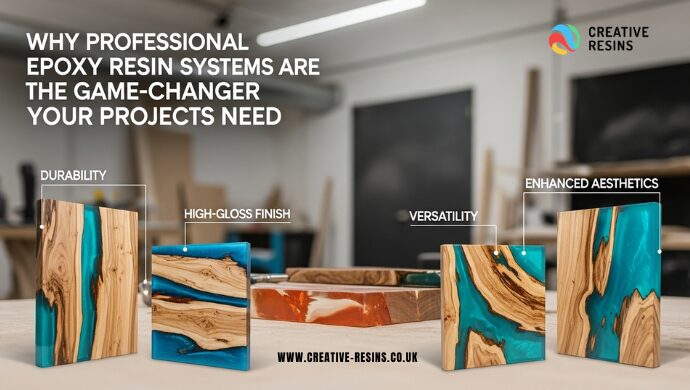
Why Professional Epoxy Resin Systems Are the Game-Changer Your Projects Need
Most manufacturers and craftspeople don’t give their resin choice much thought. They just mix it, pour, and hope for the best. But if your castings ever turn yellow, crack, or fail to achieve that crystal-clear finish, it might be time to look a little closer specifically at one often-overlooked factor: professional-grade epoxy resin systems.
What if your casting projects could deliver lasting clarity instead of disappointing results? Let’s dive into the science behind why Clear Cast epoxy resin technology could be the secret to achieving professional-quality glass applications.
⚡ What Are Professional Epoxy Resin Systems and Why Should You Care?
Professional epoxy resin systems are two-component formulations engineered for superior clarity, dimensional stability, and long-term performance. They’re like precision tools that work consistently to deliver glass-like finishes, structural integrity, and UV resistance that lasts.
In fact, recent industry analysis shows that professional-grade systems consistently outperform standard casting materials when compared to clarity retention, impact resistance, and weathering performance over time.
But and this is key they only deliver their full potential when properly selected for the specific application. A thin-section casting requiring Clear Cast 20 won’t achieve optimal results with a thick-section formula, and vice versa.
⚡ Why System Selection Makes All the Difference
Think of epoxy resin selection like choosing the right tool for a job. A basic hammer might work, but the right specialized tool brings precision and professional results. In resin casting, that “right choice” transforms amateur attempts into professional-quality outcomes.
Clear Cast systems with proper specifications:
- Maintain crystal clarity without yellowing over time
- Provide exceptional dimensional stability with minimal shrinkage
- Achieve glass-like finishes through proper machining and polishing
- Deliver reliable performance across diverse environmental conditions
If you’ve ever felt like your casting projects fall short of professional standards, system selection may be the missing link.
⚡ The Science: UV Resistance, Dimensional Stability C Clarity Retention
Here’s where things get fascinating.
Professional epoxy resin systems incorporate advanced UV resistance technology that blocks over 99% of harmful ultraviolet radiation. This protection:
- Prevents yellowing and degradation over time
- Maintains optical clarity in outdoor applications
- Supports long-term structural integrity
- Ensures consistent appearance across extended service life
But many standard casting resins lack this protection, leading to disappointing results when exposed to natural lighting conditions.
High-performance Clear Cast systems deliver exceptional dimensional stability with controlled expansion capabilities of 300-350% and minimal shrinkage, ensuring finished castings maintain precise dimensions and surface contact.
⚡ What Industry Data Shows About Professional Systems
Technical testing demonstrates that all casting resins experience some degree of shrinkage during cure. But here’s the breakthrough: professional-grade systems consistently show superior dimensional control.
Long-term performance studies reveal that professional systems deliver:
- Consistent clarity retention across years of service
- Superior impact resistance compared to standard materials
- Better chemical resistance to environmental exposure
- Reliable performance without requiring frequent replacement
For safety-critical applications like architectural glass, this performance advantage isn’t just beneficial it’s essential.
⚡ Safety Glass Applications? Professional Systems Are Essential
Professional epoxy resin systems aren’t just for decorative projects they’re critical for:
- Safety glass manufacturing (where performance standards are non-negotiable)
- Architectural installations (requiring long-term clarity and structural integrity)
- Industrial components (where failure isn’t an option)
Unlike basic casting resins filled with fillers or inferior base materials, professional-grade systems deliver structural performance and optical excellence without compromise.
⚡ How Manufacturing Approach Affects Your Results (and Why It Matters)
Here’s something most people don’t realize: standard resin manufacturers often prioritize cost over performance cutting corners on UV stabilizers, clarity agents, and dimensional control additives.
It’s like using cheap paint for a precision instrument panel.
In contrast, professional epoxy resin systems maintain rigorous quality standards throughout production. Specialized manufacturers invest in advanced formulation technology that delivers consistent results across every batch.
Of course, professional-grade systems require more sophisticated manufacturing processes. These materials may cost more initially, but they deliver unmatched performance benefits especially when produced by specialists who understand the balance between clarity, strength, and durability.
⚡ Choosing Professional Epoxy Resin: What to Look For
If you’re ready to achieve professional results, here’s what matters:
- ⬛ Clear specifications for casting depth capabilities (20mm vs 50mm systems)
- ⬛ Two-component liquid formulation for optimal mixing and performance
- ⬛ UV resistance technology with documented protection levels
- ⬛ Comprehensive warranty coverage demonstrating manufacturer confidence
- ⬛ Technical support availability for application guidance
Your projects deserve materials that deliver consistent, professional results not systems that leave you guessing about performance.
Clear Cast 20 vs Clear Cast 50: Matching System to Application
Understanding Depth Requirements and Performance Characteristics
The fundamental difference between Clear Cast 20 and Clear Cast 50 lies in their casting capabilities and cure characteristics. Clear Cast 20 excels in thin-section applications up to 20mm depth, making it perfect for jewelry production, detailed decorative work, and applications requiring fast turnaround times.
This rapid-cure formulation minimizes exposure to contamination during the vulnerable liquid phase, while delivering exceptional clarity and surface finish quality. The controlled cure speed prevents heat buildup that could cause internal stresses or surface defects.
Clear Cast 50 addresses thick-section requirements up to 50mm depth in single pours, eliminating the need for multiple layers that can create visible interfaces. The extended working time allows for careful positioning of embedded elements and thorough degassing procedures that ensure bubble-free results.
Both systems utilize advanced two-component technology that provides the dimensional stability essential for professional applications, with minimal shrinkage characteristics that maintain precise tolerances throughout the curing process.
Safety Glass Manufacturing with Advanced Resin Technology
Creating Superior Performance Solutions
Safety glass manufacturing demands materials that exceed traditional performance standards while providing enhanced benefits like superior soundproofing and impact distribution. Professional epoxy resin systems create laminated structures that distribute impact forces across the entire surface, preventing the catastrophic failure patterns associated with standard approaches.
The manufacturing environment requires precise control to ensure optimal curing conditions. Temperature stability during cure prevents internal stresses that compromise long-term performance, while contamination control eliminates weak points that could lead to premature failure. Professional safety glass applications require comprehensive testing protocols that verify impact resistance, optical clarity, and environmental durability. These standards ensure finished products meet or exceed regulatory requirements for critical applications.
Professional safety glass applications require comprehensive testing protocols that verify impact resistance, optical clarity, and environmental durability. These standards ensure finished products meet or exceed regulatory requirements for critical applications.
Decorative Applications and Creative Techniques
Achieving Professional Results in Custom Projects
Professional-grade epoxy resin systems enable unlimited creative possibilities through water-clear, non-yellowing formulations that accept pigments, metallic powders, and special effect additives while maintaining structural integrity.
Successful embedding techniques require understanding material compatibility and thermal expansion characteristics. Professional craftspeople select embedding materials based on thermal stability and chemical compatibility to prevent stress-related failures during temperature cycling.
The embedding process demands precise timing during the optimal viscosity window when resin provides adequate support while remaining fluid enough to eliminate air pockets around complex geometries. This balance requires experience with specific cure characteristics.
Professional finishing transforms cast pieces into glass-like surfaces through progressive machining and polishing processes. Starting with appropriate grits to remove surface imperfections, followed by compound polishing to achieve mirror-like finishes, proper technique prevents heat-related stress cracking.
Quality Control and Professional Standards
Meeting Performance Requirements Consistently
Professional applications demand comprehensive quality assurance that ensures consistent performance across production batches. Material certification verifies incoming raw materials meet specifications, while process monitoring confirms mixing ratios, cure conditions, and handling procedures remain within acceptable parameters.
Chemical resistance properties protect finished products from environmental degradation that could compromise appearance or structural integrity. Professional-grade systems demonstrate superior resistance to cleaning solvents, weathering effects, and chemical exposure.
Comprehensive warranty coverage reflects manufacturer confidence in long-term performance and durability, providing assurance for applications where material failure could result in safety hazards or economic losses.
Documentation requirements include material certificates, performance testing results, and ensuring traceability and regulatory approval for safety-critical applications.
✨ Final Thoughts: Transform Your Projects with Professional Systems
Your applications deserve better than materials that compromise on performance. Choosing professional-grade Clear Cast epoxy resin systems is a strategic decision that delivers superior results project after project, year after year.
So the next time you plan a casting project, skip the basic options and generic formulations. Instead, invest in professional systems and not just any professional grade, but the right specification for your application. Your results will speak for themselves.
⚡ Ready to achieve professional-quality results?
Discover our complete range of Clear Cast epoxy resin systems, engineered with advanced formulations and precision manufacturing to deliver the crystal-clear, durable results your projects demand without compromise.
Contact Creative Resins today for expert guidance on selecting the optimal clear cast epoxy resin system for your specific safety glass or decorative application requirements.

The Complete Guide to Automated Paint Spraying Systems: Revolutionizing Window, Door and Glass Manufacturing Efficiency
Manufacturing efficiency has become the defining factor that separates industry leaders from competitors struggling to meet modern quality demands. As production volumes increase and tolerance for defects decreases, manufacturers across the window, door, and glass industries are discovering that manual paint application methods simply cannot deliver the consistency and speed required in today’s market.
The transformation toward automated paint spraying systems represents more than just equipment upgrades—it’s a fundamental shift in how coating operations achieve precision, reduce waste, and maintain competitive advantage. This comprehensive guide examines how advanced spray equipment technology can revolutionize your production capabilities while delivering measurable returns on investment.
Understanding Automated Paint Application Technology for Multi-Substrate Manufacturing
Modern automated paint spraying systems have evolved far beyond simple spray guns mounted on conveyor belts. Today’s sophisticated equipment integrates multiple technologies to handle the complex demands of multi-substrate manufacturing environments where consistency and precision determine profitability.
Core Components of Professional Spray Systems
Sensor control technology forms the foundation of effective automated systems, enabling precise application rates and consistent coverage across varying substrate shapes and widths. Many automated systems now offer sensor-assisted control for adjusting spray patterns, flow rates, and timing—ideal for handling varying shapes and sizes of doors, frames, or panels. Creative Resins’ support programmable settings that allow for precision application on complex profiles. This technology proves especially valuable when handling complex geometries found in modern composite doors and architectural glass panels.
High-pressure spray systems, such as those found in Creative Resins’ automatic spray booths, can be integrated with conveyor solutions to support continuous production runs. These systems can automatically adjust belt speeds based on substrate requirements, coating thickness specifications, and drying time parameters. According to the Industrial Coating Association, facilities implementing variable speed integration report up to 40% improvements in throughput efficiency compared to fixed-speed alternatives.
Integral filtration and extraction systems ensure clean working environments while maintaining optimal paint viscosity throughout production runs. These systems prevent contamination that can cause finish defects, while simultaneously protecting workers from harmful vapors. The combination of environmental control and quality assurance makes these systems essential for facilities operating under strict regulatory compliance requirements.
Programmable capabilities represent perhaps the most significant advantage of modern automated systems. Manufacturers can store specific settings for different products, substrate types, and coating specifications, virtually eliminating setup time between production runs. This programmability reduces material waste by ensuring optimal spray patterns are maintained consistently, regardless of operator experience levels.
Maximizing Production Efficiency Through Advanced Mixing and Dispensing Systems
The integration of automated mixing and dispensing technology addresses one of manufacturing’s most persistent challenges: achieving consistent color and coating properties across large production volumes. Traditional manual mixing methods introduce variables that can compromise finish quality and increase material waste.
Precision Color Management and Material Optimization
Automatic color dispensing, like Creative Resins’ ColorMatch system, ensures consistent pigment distribution and fast turnaround. While gyroscopic mixing and spectrophotometer integration may be available through compatible systems, Creative Resins focuses on precision tinting through pre-programmed color databases.
Computer-controlled dispensing systems capable of handling over 15,000 color formulations with automatic online updates enable rapid color changes without production line shutdowns. This capability proves especially valuable for custom manufacturers serving diverse markets where color variety and quick turnaround times directly impact customer satisfaction and order volumes.
Advanced mixing equipment featuring 60-second cycle times and capacity for containers up to 36 kilograms allows for just-in-time production strategies. This approach reduces inventory costs by minimizing the volume of pre-mixed materials that must be stored, while also preventing material degradation that occurs when coatings sit unused for extended periods.
Spectrophotometer integration provides real-time color verification throughout the production process. This technology enables quality control personnel to identify and correct color variations before they impact finished products, reducing costly rework that can consume 8-12% of production capacity in facilities relying on manual quality control methods.
Optimizing Drying and Curing Processes for Enhanced Throughput
Effective drying and curing systems represent critical bottlenecks in most coating operations. Traditional approaches often create production delays while consuming excessive energy, making optimization in this area particularly valuable for overall facility efficiency.
Temperature Control and Energy Efficiency Solutions
Fully adjustable temperature and belt speed systems enable manufacturers to optimize drying times for both water-based and solvent-based coatings. Energy efficiency studies from the Department of Energy demonstrate that optimized drying systems can reduce energy consumption by up to 40% compared to conventional fixed-temperature approaches, while simultaneously improving cure quality and reducing defect rates.
Air circulation technology designed specifically for complex geometries ensures uniform curing across profiles, doors, and intricate parts. This targeted airflow eliminates the hot spots and cold zones that commonly cause finish defects in traditional drying systems. The result is consistently cured coatings that meet durability specifications across the entire product surface.
Specialized drying systems, such as those used in Creative Resins’ glass coating lines, are designed to maintain clarity and adhesion on glass panels. These setups ensure even coating results and fast throughput for architectural or decorative glass. These specialized systems accelerate processing times while maintaining coating integrity and optical clarity—critical factors for architectural and automotive glass applications where even minor imperfections can render products unusable.
Synchronized drying systems that integrate seamlessly with application equipment create continuous production workflows that eliminate bottlenecks. When drying capacity matches application rates, manufacturers can maintain steady throughput without accumulating work-in-progress inventory that ties up floor space and working capital.
Quality Control Integration and Performance Monitoring
Modern automated systems incorporate sophisticated quality control mechanisms that continuously monitor and adjust performance parameters to maintain consistent results throughout production runs.
Ensuring Consistent Results Through Advanced Systems
Features like quick-cleaning spray guns and programmable settings minimize downtime and help ensure consistency across batches. Creative Resins systems are built for ease of maintenance and repeatability, even across complex multi-substrate runs. These systems automatically detect when spray nozzles require cleaning or when calibration parameters drift outside acceptable ranges. Manufacturing equipment reliability studies show that facilities with automated maintenance systems experience 60-75% fewer unplanned shutdowns compared to those relying on scheduled maintenance alone.
Many modern systems provide programmable application settings and material tracking to ensure process consistency. Creative Resins’ machinery enables repeatable finish quality and offers flexibility for diverse production runs. This data provides managers with insights necessary for continuous process improvement, enabling identification of inefficiencies before they impact overall productivity. The ability to correlate performance data with finished product quality creates feedback loops that drive ongoing optimization efforts.
Automated quality checks identify potential issues before they impact production flow. Sensor technology can detect variations in substrate preparation, coating application thickness, or environmental conditions that might compromise finish quality. Early detection enables corrective action that prevents defective products from moving through subsequent production stages.
Performance analytics enable manufacturers to optimize material usage, predict maintenance requirements, and improve overall equipment effectiveness (OEE). These systems typically track key performance indicators including uptime percentages, material utilization rates, and quality metrics that correlate directly with profitability.
ROI Analysis and Implementation Strategies for Paint Automation Systems
Understanding the financial impact of automation investments requires careful analysis of both direct cost savings and indirect benefits that improve competitive positioning.
Cost-Benefit Evaluation and Integration Planning
Automated systems typically reduce labor costs by 60-75% while increasing production capacity by 200-300%. Industry analysis from the Automation Federation indicates that most manufacturing facilities achieve payback periods ranging from 12-18 months, depending on production volumes and current labor costs. These returns make automation financially attractive even for mid-sized manufacturers operating in competitive markets.
Material waste reduction through precise application control can decrease paint consumption by 15-25%. For high-volume manufacturers processing thousands of units monthly, these savings often exceed the annual cost of equipment financing. Additionally, reduced waste simplifies environmental compliance and disposal costs associated with unused materials.
Improved finish quality and consistency reduce rework rates from industry averages of 8- 12% to less than 2%. This improvement directly impacts profitability by eliminating the labor, materials, and equipment time required to correct defective products. Customer satisfaction improvements from consistent quality also contribute to increased repeat business and referral rates.
Strategic implementation planning that considers existing infrastructure, operator training requirements, and maintenance capabilities ensures successful automation adoption with minimal production disruption. Facilities that invest in comprehensive training programs and establish proper maintenance protocols typically achieve target performance levels 40-50% faster than those attempting rapid implementation without adequate preparation.
Future-Proofing Your Manufacturing Operations Through Paint Automation Excellence
The decision to implement automated paint spraying systems extends beyond immediate efficiency gains to position manufacturers for long-term success in increasingly competitive markets. As quality standards continue rising and labor costs increase, automation becomes essential for maintaining profitable operations.
Advanced sensor technology, precision mixing systems, and intelligent drying equipment create comprehensive solutions that address the fundamental challenges facing modern coating operations. These integrated systems deliver consistent results while reducing dependence on skilled labor that becomes increasingly difficult to find and retain.
Manufacturers who embrace automation technology today position themselves to meet evolving quality standards, environmental regulations, and customer expectations while maintaining profitability. The combination of improved efficiency, reduced waste, and enhanced quality creates competitive advantages that compound over time, making early adoption a strategic necessity rather than a luxury consideration.
Ready to transform your coating operations with automated paint spraying technology? Contact our industrial coating specialists to discuss how these advanced systems can optimize your manufacturing processes and deliver measurable ROI improvements tailored to your specific production requirements.