

Category: Uncategorized
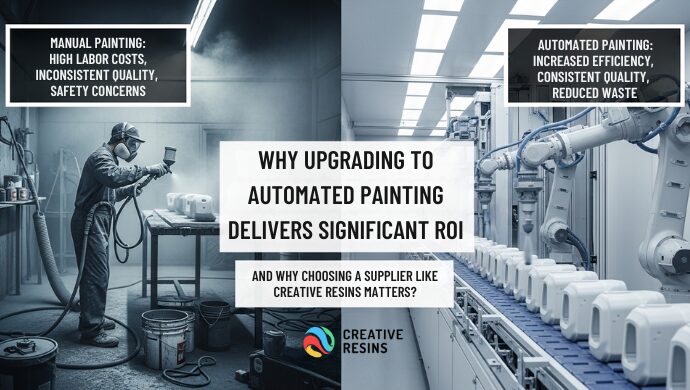
Why Upgrading from Manual Painting to an Automated Painting Line Delivers Significant ROI And Why Choosing a Supplier Like Creative Resins Matters
In today’s competitive manufacturing landscape, consistency, efficiency, and sustainability are no longer optional, they’re essential. Whether you operate in the glass, plastics, metal, or composite industry, the finishing process plays a critical role in product quality and brand reputation.
For many businesses, manual painting has long been the norm. However, as demand increases and quality expectations tighten, more companies are discovering the significant advantages of upgrading to an automated painting line.
At Creative Resins, we understand these challenges firsthand. With decades of experience supplying both manual spray systems and fully automated painting lines, alongside our own specially formulated coating systems, we’re uniquely positioned to support customers from initial proof-of-concept through long-term operational efficiency.
Here’s why automation is transforming finishing departments, and why partnering with a supplier who provides both the equipment and the coatings ensures the highest possible ROI.
The Limitations of Traditional Manual Painting
Manual painting has its place, particularly for:
- Bespoke jobs
- Small-batch production
- Prototyping
- Colour matching
However, it also introduces challenges such as:
- Inconsistent finish quality
- Variable paint consumption and overspray
- Higher labour costs and reliance on skilled operators
- Slower production throughput
- Increased rework or rejects due to human error
- Limited traceability and process control
As production demands scale, these limitations compound, reducing efficiency and cutting into profit margins.
The Key Benefits of Automated Painting Lines
Automated painting systems deliver performance improvements that manual methods cannot match.
1. Unmatched Consistency and Quality
Automation ensures identical application every cycle, correct thickness, uniform coverage, and fewer defects. This improves finish quality and customer satisfaction.
2. Significant Reduction in Paint Usage
Precision spraying and high-transfer-efficiency equipment reduce overspray and wasted material. Many customers experience 15–40% paint savings.
3. Faster Production and Higher Throughput
Automated systems operate continuously at controlled speeds, enabling predictable, high-volume output and allowing you to take on larger orders.
4. Lower Labour Costs
Automation reduces dependence on highly skilled sprayers, minimises manual handling, and allows staff to be redeployed to more value-added tasks.
5. Improved Health, Safety & Environmental Performance
Robotic or enclosed spray environments reduce operator exposure to chemicals and VOCs, while lowering emissions and simplifying compliance.
6. Data, Traceability & Process Control
Automated lines integrate with smart systems that record:
- Paint consumption
- Cycle times
- Batch data
- Maintenance logs
This provides real-time troubleshooting and supports continuous improvement.
ROI: How Quickly Does an Automated Line Pay for Itself?
Return on investment varies by:
- Production volume
- Number of shifts
- Type of coating
- Automation level
Typical ROI is achieved through:
- Reduced labour cost
- Lower material consumption
- Fewer rejects and less rework
- Increased throughput
- Improved reliability and maintenance efficiency
Most customers see ROI within 12–36 months, with high-volume facilities achieving this even sooner.
Why Creative Resins Offers a Unique Advantage
Creative Resins uniquely supplies the complete finishing solution:
- Manual spray equipment
- Automated painting lines
- Specialist coatings designed to run perfectly on both
This provides four major advantages:
1. Perfect Compatibility
When coatings and equipment come from the same supplier, issues such as poor atomisation, adhesion failures, incorrect viscosity, and unnecessary downtime are avoided.
2. One Supplier, One Support Team
From installation and training to maintenance and chemical supply, a single partner manages the entire process, ensuring consistency and fast support.
3. Scalable Solutions
Creative Resins offers both manual and automated systems, enabling businesses to:
- Start with manual spraying and upgrade later
- Operate hybrid manual/automated lines
- Use manual spraying for bespoke work and automation for volume
This ensures investments match real production needs.
4. Ongoing R&D and Innovation
Our in-house laboratory continuously develops new coatings, colours, and system enhancements so your finishing line evolves with your business.
The Best of Both Worlds: Manual + Automated
Many companies benefit from combining both methods.
Manual Spray Ideal For:
- Quick colour matching
- Bespoke or small-batch work
- Touch-ups and prototyping
Automated Lines Ideal For:
- Consistent, large-scale production
- High-efficiency application
- Precise control and repeatability
Creative Resins is one of the few suppliers able to design a fully integrated system where both processes work together seamlessly.
Final Thoughts: Future-Proofing Your Finishing Process
Upgrading from manual to automated painting is not just a technical improvement, it’s a strategic investment. With measurable benefits including:
- Higher quality
- Reduced costs
- Faster production
- Strong ROI
automation strengthens your competitive advantage.
By choosing Creative Resins as your partner, you gain:
- Greater reliability
- Simplified support
- Optimised performance
- Long-term value
Whether you’re ready for full automation or prefer a gradual scale-up, Creative Resins is committed to helping you build a finishing process that delivers quality, consistency, and profitability for years to come.
Revolutionary Resin Techniques: Creating Commercial-Grade-Stained Glass in Half the Time
Most glass fabricators don’t think twice about how they create decorative glass. They stick with traditional lead came methods because “that’s how it’s always been done.” But if you’re losing bids to faster competitors, turning away commercial projects with tight deadlines, or struggling to find skilled craftspeople, it might be time to look at one gamechanging alternative: professional resin-based stained-glass systems.
What if your decorative glass production could match traditional quality while cutting production time in half? Let’s explore why commercial-grade resin techniques could transform your glass fabrication business.
⚡ What Are Professional Resin-Stained Glass Systems, and Why Should You Care?
Professional resin-stained glass systems use specialized outline and infill resins to replicate traditional lead glass aesthetics with modern efficiency. It’s like having a traditional craftsperson skill set in a bottle, creating authentic stained-glass effects without years of specialized training.
In fact, the stained-glass market has grown to $4.31 billion in 2024, with projections reaching $6.74 billion by 2033. This growth isn’t just about nostalgia. Modern architects and designers are specifying decorative glass again, but they need it faster and more affordably than traditional methods allow.
But this is crucial; it only delivers professional results when you use the right materials and techniques. A craft-grade resin kit won’t produce the durability and optical quality that commercial projects demand.
⚡ Why Professional Techniques Make All the Difference
Think of resin-stained glass like automated paint spraying versus hand-brushing. Both can work, but one scales to commercial production while maintaining consistent quality.
Professional resin techniques deliver:
- Substrate versatility bonding to glass, wood, acrylic, aluminum, ceramic, and stainless steel
- Weather resistance with 10-year exterior warranties even in extreme climates
- Production speed completing panels in hours instead of days
- Labor flexibilityusing technicians instead of specialized craftspeople
If you’ve ever had to turn down a profitable project because your traditional production couldn’t meet the timeline, professional resin systems solve that problem.
⚡ The Technology: Two-Component Chemistry for Permanent Bonds
Here’s where things get interesting.
Professional resin systems use two-component chemistry that creates permanent molecular bonds during curing. The outline resin, typically mixed at 1:1 ratio, cures through chemical reaction to form raised lines on the glass surface. These lines contain the infill resins, concentrated transparent pigments that bond permanently to the substrate.
This advanced formulation:
- Creates UV-stable bonds that won’t yellow or degrade over decades
- Ensures complete curing without requiring heat or specialized equipment
- Delivers consistent performance across varying temperatures and humidity levels
But many craft-grade products use inferior formulations that can’t match this durability.
The difference shows color stability, adhesion strength, and weather resistance.
Professional systems maintain their properties under temperature cycling from -40°C to +80°C, salt spray exposure, and 2,000+ hours of accelerated UV testing, conditions that cause basic products to fail Creative Resins Distribution.
⚡ What the Market Data Says About Production Efficiency
Traditional stained-glass production involves 60-70% labor costs versus 30-40% materials Straits Research. That labor-heavy model works fine for custom art pieces, but it struggles with commercial volume.
Professional resin systems shift this equation:
- Reduced specialized labor using technicians instead of master craftspeople
- Faster production cycles completing standard panels in 3-4 hours versus full-day traditional timelines
- Lower breakage losses eliminating fragile cutting and grinding steps
- Simplified installation with lighter weight and more durable finished panels
And if you’re competing for hotel lobbies, restaurant partitions, or residential development projects, production speed directly impacts your ability to win bids.
⚡ Commercial Applications Where Resin Systems Excel
Professional resin techniques aren’t just for hobbyists; they’re solving real production challenges:
Hospitality Projects: Hotels need custom lobby features and dining area partitions on tight construction schedules. Resin systems deliver brand-specific designs without the lead times traditional methods require.
Commercial Interiors: Office buildings want privacy glass for conference rooms and executive areas. Decorative resin patterns provide visual screening while maintaining the open feel of modern workplaces’ demand.
Residential Development: Builders differentiate their properties with custom entry features and interior upgrades. Resin systems make decorative glass accessible at production-home price points.
Religious Facilities: New construction churches and temples balance aesthetic goals with budget constraints. Resin techniques enable decorative glass in secondary spaces while reserving traditional craft for primary sanctuaries.
Unlike basic craft applications, these commercial projects require documented performance, warranty support, and production consistency, exactly what professionalgrade resin systems deliver.
⚡ How Automated Equipment Transforms Production Capacity
Here’s something most fabricators don’t realize semi-automated dispensing equipment eliminates the skill bottleneck entirely, and at investment levels far below traditional shop setup costs.
Professional dispensing systems:
- Import digital designs reproducing patterns with perfect consistency
- Control bead width automatically adjusting for different viewing distances
- Enable multi-plot capabilities handling complex designs without operator judgment
- Include costing features calculating material usage for accurate project bidding
Computer-controlled dispensing equipment starts around £8,000-£15,000, representing 40-60% lower investment than complete traditional studios requiring grinders, soldering stations, pattern equipment, and extensive glass inventory.
Of course, manual bottle applications work perfectly for small custom projects. But commercial fabricators handling multiple identical units gain massive productivity advantages through automation.
⚡ Advanced Color Control: Creating Custom Effects
Professional resin systems offer color flexibility that exceeds traditional glass options:
13+ base pigments that intermix for thousands of custom hues
Opacity control from fully transparent to solid opaque through white pigment addition
Texture effects using stipple additives and crazy base techniques
Metallic finishes with copper, silver, and gold tones for Victorian aesthetics
Batch consistency through documented mixing ratios for multi-panel projects
Your decorative glass should match design specifications precisely, not compromise based on available glass colors from European suppliers with long lead times.
⭐ Quality Control: What Separates Professional from Craft-Grade
Professional-grade resin systems enable applications impossible with basic products:
Exterior Installations: Meeting 10-year warranty requirements through validated UV resistance, salt spray testing, and thermal cycling protocols. These aren’t marketing claims; they’re documenting performance standards.
Architectural Specifications: Providing the technical data sheets, MSDS documentation, and performance certificates that architects and general contractors require for commercial projects.
Production Consistency: Delivering identical results across dozens of panels produced over weeks or months, critical for large hospitality or office projects where visible variations would be unacceptable.
Multi-Substrate Applications: Bonding reliably to glass, wood, aluminum, and ceramic, expanding design possibilities beyond what traditional lead glass can achieve.
Production Economics: The Real Cost Comparison
Basic material costs tell only part of the story. Professional resin systems may cost 20-30% more per square meter than lead and glass supplies, but total project economics favor resin through multiple factors:
Labor Efficiency: Reducing skilled craftsperson hours by 60-75% on standard patterns, the biggest cost driver in traditional production.
Equipment Investment: Requiring 40-60% less capital than traditional shop setup, freeing cash for marketing and business development.
Market Expansion: Enabling profitable bidding on commercial projects that traditional timelines couldn’t support, growing addressable market opportunities.
Installation Simplification: Cutting site labor costs through lighter weight panels and simplified mounting procedures.
The business case isn’t about material costs; it’s about total production economics and market positioning.
⭐ Final Thoughts: Transform Your Production Capabilities
Your glass fabrication business deserves better than choosing between slow traditional methods and substandard craft products. Choosing professional-grade resin systems isn’t abandoning quality speed; it’s adopted modern techniques that deliver authentic aesthetics with commercial efficiency.
So, the next time you evaluate a decorative glass opportunity, skip the assumption that traditional methods are your only option for quality results. Instead, consider proven resin systems with documented performance, comprehensive technical support, and production capabilities that match modern project demands. Your bottom line will notice the difference.
⭐ Ready to transform your decorative glass production?
Creative Resins’ professional stained glass resin systems are engineered specifically for commercial glass fabricators and architectural processors. Our Supreme Outline Resin and Infill Resin range delivers the weather resistance, optical clarity, and production consistency that demanding projects require, backed by comprehensive technical support and application training.
[ Contact Creative Resins for Professional Resin-Stained Glass Solutions →]
Visit creative-resins.co.uk or email sales@creative-resins.co.uk to discuss your production requirements and request sample materials.
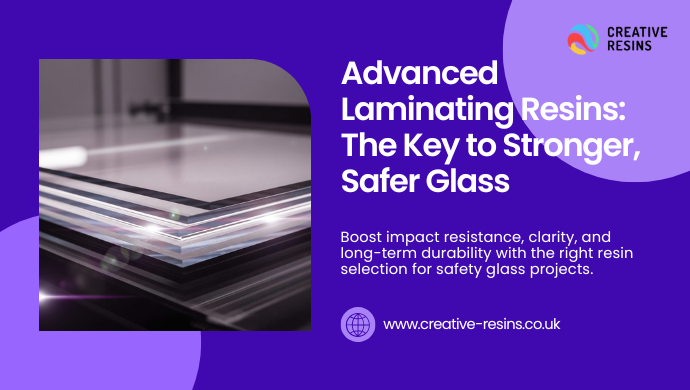
Why Advanced Laminating Resin Selection Is the Game-Changer Your Safety Glass Projects Need
Most manufacturers don’t give their laminating resin much thought. They choose based on price, availability, or what they’ve always used. But if your safety glass ever fails prematurely, delaminates, or doesn’t meet performance standards, it might be time to look a little closer, specifically at one often-overlooked factor: advanced laminating resin selection.
What if your glass manufacturing process could enhance safety performance instead of just meeting minimum requirements? Let’s dive into the science behind why strategic laminating resin selection could be the secret to superior safety glass that stands the test of time.
⚡ Understanding Glass Laminating Resin Requirements for Safety Applications
Safety glass manufacturing represents one of the most demanding applications in the glazing industry. Your material choices don’t just affect quality, they directly impact human safety and structural integrity.
Think about it: every automotive windshield, architectural safety panel, and security barrier depends on the invisible bond between glass layers. That bond? It’s entirely dependent on your laminating resin performance.
Modern safety glass applications span everything from car windshields to skyscraper facades. Each demands precise material specifications where your resin choice influences impact resistance, optical clarity, and decades of reliable performance.
Here’s the reality: understanding the critical performance factors that separate professional-grade systems from commodity alternatives enables you to optimize product quality while ensuring compliance with international safety glass standards.
⚡ Critical Adhesion Properties for Glass Laminating Resin Performance
The foundation of effective safety glass lies in achieving permanent cross-bonding between glass layers. But here’s what most people don’t realize: not all laminating resins are created equal.
Creative Resins’ laminating systems are engineered with adhesion promoters to ensure permanent bonding even under UV exposure and temperature extremes. Research from the Glass Manufacturing Industry Council shows that properly prepared glass surfaces can achieve bond strengths exceeding 3,000 PSI when paired with high-performance laminating resin systems.
But strength isn’t everything. Your resin also needs:
UV-stable formulations that block over 99% of harmful radiation
Temperature resistance from -40°C to +120°C
Chemical resistance against environmental contaminants
Consistent performance across varying atmospheric conditions
Surface preparation plays a crucial role here. Remove all contamination sources, fingerprints, manufacturing residues, atmospheric deposits, anything that could compromise the resin-glass interface. It’s like preparing a surface for premium paint application: the prep work determines everything.
⚙️ Dimensional Stability and Mechanical Properties in Safety Glass Applications
Here’s where things get fascinating: superior dimensional stability isn’t just a nice-tohave feature,it’s fundamental to long-term safety glass performance.
Any significant volume change during cure introduces internal stress concentrations that compromise performance. High-performance formulations can flex up to 350% without cracking, while maintaining minimal shrinkage during curing. This prevents stress fractures in applications like automotive windshields exposed to freezing winters and scorching summers. That consistency ensures uniform resin thickness throughout your laminated assembly.
The mechanical balance is critical too. Your laminating resin must carefully balance flexibility with rigidity to optimize impact energy absorption. According to International Organization for Standardization data, properly formulated laminated safety glass can absorb up to 40% more impact energy than equivalent thickness tempered glass.
Why? The resin system acts as both structural adhesive and energy dissipator, transferring loads between glass plies while providing controlled failure mechanisms that maintain glazing integrity even after impact damage.
Bonus benefit: Quality glass laminating resin formulations provide significant acoustic performance improvements, reducing noise transmission by up to 40% compared to monolithic glass of equivalent thickness.
⚡Application Techniques for Optimal Glass Laminating Resin Results
Achieving optimal performance requires more than just good materials,you need controlled application protocols that address every variable.
Your manufacturing facility must maintain temperature and humidity within specified ranges. Think of it like baking: the environment affects the final product as much as the ingredients do.
Surface preparation goes beyond basic cleaning:
Specialized treatments that optimize surface energy
Adhesion promoter application when required
Validation through adhesion testing
Consistent procedures across production runs
Bubble elimination represents a critical quality control factor. Entrapped air creates stress concentration points that significantly reduce impact resistance and optical clarity. Professional application systems incorporate vacuum degassing capabilities and controlled application speeds to minimize bubble formation.
Curing process optimization involves staged temperature profiles that promote gradual crosslink development while minimizing internal stress. According to research published in the Journal of Materials Engineering, optimal cure schedules typically involve initial temperature holds followed by controlled ramp rates that accommodate the thermal mass of your assembly.
⚡Environmental Considerations and Long-Term Performance
Weather resistance validation through accelerated aging protocols provides essential data for predicting long-term performance. Standard test methods – UV exposure, thermal cycling, humidity stress testing, help you select appropriate systems for specific climate zones and applications.
Environmental compliance increasingly influences material selection as regulatory frameworks evolve. The good news? VOC-free laminating resin formulations prove that environmental responsibility and superior performance can coexist with proper formulation chemistry.
At Creative Resins, we offer VOC-free laminating resin systems that combine high optical clarity with long-term weather resistance, helping manufacturers meet both performance and environmental targets. Advanced systems that facilitate end-of-life separation enable glass recovery and reprocessing, supporting sustainability initiatives while maintaining safety glass performance requirements.
The bottom line: Lifecycle cost analysis reveals that premium laminating resin systems deliver economic advantages through reduced maintenance and extended service life. Initial material costs may exceed alternatives, but total cost of ownership typically favors high-performance systems that deliver reliable long-term performance.
✨ Advancing Safety Glass Excellence Through Strategic Laminating Resin Selection
Your laminating resin selection represents a critical decision point that influences every aspect of safety glass performance, from initial impact resistance to decades of environmental exposure.
The investment in quality materials and proper application techniques pays dividends through enhanced product performance and reduced warranty claims. Understanding the complex interplay between adhesion properties, dimensional stability, and application parameters enables you to optimize processes for consistent, reliable results.
Professional-grade laminating resin systems deliver measurable advantages in structural integrity, optical clarity, and long-term durability when properly specified and applied according to established protocols.
Creative Resins’ expertise in specialized laminating resin formulations reflects decades of development focused on the unique challenges of safety glass manufacturing. Our technical team understands the critical performance factors that distinguish professional applications from commodity solutions.
Ready to optimize your safety glass manufacturing process?
Contact our technical specialists to discuss your specific laminating resin requirements and discover how our advanced formulations can enhance product quality while streamlining your production operations. Our team provides detailed technical support and application guidance tailored to your unique manufacturing environment.
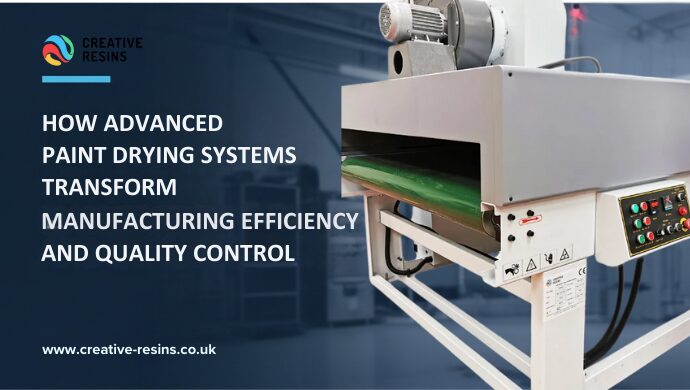
How Advanced Paint Drying Systems Transform Manufacturing Efficiency and Quality Control
Most manufacturers don’t give their paint drying process much thought. They just apply the coating, wait for it to dry, and move on. But if your production line ever faces delays, quality issues, or inconsistent finishes, it might be time to look a little closer, specifically at one often-overlooked factor: advanced drying technology.
What if your manufacturing process could optimize efficiency instead of creating bottlenecks? Let’s dive into the science behind why industrial paint drying systems could be the secret to faster production and superior quality control.
⚡ Understanding Industrial Paint Drying Challenges in Modern Manufacturing
Traditional paint drying is a production bottleneck, which means it slows down your entire manufacturing line and creates costly delays. It’s like a traffic jam that affects everything downstream.
Manufacturing facilities across industries face an increasingly complex challenge: balancing production speed with consistent quality standards while managing operational costs. According to recent industry analysis, manufacturers report that inadequate drying processes contribute to up to 15% of their total production delays.
But and this is key these delays stem from inconsistent curing times, which create quality variations and necessitate costly rework procedures. A manufacturing line with outdated drying methods won’t deliver the same efficiency as one with advanced curing technology.
⚡ The Science Behind Effective Paint Curing Technology
️⚡ Temperature and Airflow Control Fundamentals
Think of paint curing like baking a cake. Too little heat and it won’t set properly. Too much heat and you’ll damage the surface. The right temperature, typically 40-80°C depending on your coating, ensures perfect molecular cross-linking every time.
Advanced paint drying systems deliver:
- ✅ Precise temperature control that prevents thermal damage
- ✅ Controlled airflow circulation that removes solvent vapors evenly
- ✅ Automatic parameter adjustment based on substrate and coating type
- ✅ Up to 40% faster drying times compared to conventional methods
Your drying system should optimize your process, not make it work harder to achieve consistent results.
⚙️ Manufacturing Efficiency Through Automated Drying Equipment
️⚡ Production Line Integration and Throughput Optimization
Here’s where things get exciting.
Creative Resins’ coating technologies are engineered to work seamlessly with advanced drying systems, ensuring consistent results across glass, PVCu, composites, and metals.
Multi-zone drying chambers are game-changers because they handle:
- Flash-off phase (removes initial solvents)
- Intermediate cure (develops coating properties)
- Final drying (completes the curing process)
All in a single pass. Studies show this integration can improve overall production line efficiency by 30-35% while reducing material waste.
And here’s the best part: these systems accommodate diverse substrates simultaneously, flat panels, complex profiles, three-dimensional components, maximizing your equipment utilization without compromising quality.
⚙️ Quality Control Systems and Consistency Measures
️⚡ Monitoring and Documentation for Regulatory Compliance
Your quality control shouldn’t depend on guesswork or operator experience.
Modern industrial drying systems incorporate real-time monitoring that tracks every critical parameter temperature profiles, humidity levels, drying duration, and airflow patterns. This creates detailed audit trails for quality assurance and regulatory compliance.
The results speak for themselves:
- ✅ 60% reduction in quality variations compared to manual processes
- ✅ Elimination of common defects like orange peel and solvent entrapment
- ✅ Repeatable results across all production runs
- ✅ Automatic safety features that protect products and personnel
If you’ve ever dealt with warranty claims or customer complaints due to coating failures, automated drying systems virtually eliminate these costly issues.
⚙️ Substrate-Specific Drying Optimization Strategies
️♻️ Tailored Approaches for Different Materials and Coatings
Not all substrates are created equal. Your drying strategy shouldn’t be one-size-fits-all either.
Glass substrates need specialized heating patterns to prevent thermal stress, critical for safety glass and decorative applications.
Composite doors and PVCu profiles benefit from graduated temperature increases that accommodate different thermal expansion rates between materials.
Metal components often require accelerated flash-off followed by controlled curing to maintain anti-corrosion properties.
Water-based vs. solvent-based systems demand completely different parameters. Advanced systems automatically adjust based on your coating type, ensuring optimal results regardless of formulation complexity.
⚙️ Energy Efficiency and Environmental Considerations
️♻️ Sustainable Drying Technology Solutions
Here’s something most manufacturers don’t know modern drying systems can reduce your energy costs by 20-30% through heat recovery technology.
These systems capture waste heat and redirect it to:
- Preheat incoming air
- Provide supplemental facility heating
- Support other manufacturing processes
Advanced filtration systems don’t just meet environmental regulations; they recover valuable solvents for reuse. It’s like getting nutrients back from your process instead of throwing them away.
Smart sensors monitor production flow, automatically reducing energy consumption during low-demand periods, while still maintaining instant readiness for full capacity.
️⚙️ Implementing Advanced Drying Technology for Competitive Manufacturing Advantage
Strategic investment in industrial paint drying systems delivers measurable returns that compound over time:
- ✅ 25-40% cycle time reduction
- ✅ 60% improvement in quality consistency
- ✅ 20-30% energy cost reduction
- ✅ Substantial competitive advantages in efficiency-driven markets
The selection process requires careful analysis of your specific needs, production volumes, substrate variety, and coating specifications. Success depends on matching system capabilities to operational requirements, not just choosing based on initial cost.
Technical expertise plays a crucial role in maximizing benefits. Companies like Creative Resins provide specialized knowledge and support services that ensure your investment delivers maximum returns through proper implementation and ongoing optimization.
The future of manufacturing competitiveness increasingly depends on advanced process control technologies. Companies that embrace these solutions now position themselves advantageously for long-term success in markets demanding higher quality standards and faster delivery times.
️⚙️ Ready to Transform Your Manufacturing Process?
Your production line deserves better than outdated drying methods that create bottlenecks and quality issues. Choosing advanced paint drying technology is a strategic investment that delivers measurable improvements every day, every production run, all year long.
Don’t let inefficient drying processes hold back your manufacturing potential. Contact Creative Resins’ technical specialists to discover how customized drying solutions can optimize your specific operations and enhance your competitive market position.
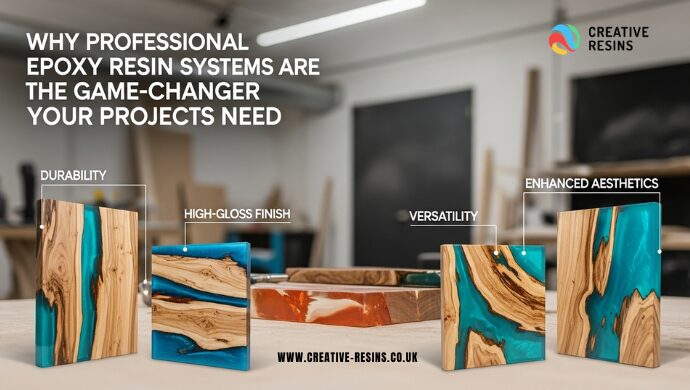
Why Professional Epoxy Resin Systems Are the Game-Changer Your Projects Need
Most manufacturers and craftspeople don’t give their resin choice much thought. They just mix it, pour, and hope for the best. But if your castings ever turn yellow, crack, or fail to achieve that crystal-clear finish, it might be time to look a little closer specifically at one often-overlooked factor: professional-grade epoxy resin systems.
What if your casting projects could deliver lasting clarity instead of disappointing results? Let’s dive into the science behind why Clear Cast epoxy resin technology could be the secret to achieving professional-quality glass applications.
⚡ What Are Professional Epoxy Resin Systems and Why Should You Care?
Professional epoxy resin systems are two-component formulations engineered for superior clarity, dimensional stability, and long-term performance. They’re like precision tools that work consistently to deliver glass-like finishes, structural integrity, and UV resistance that lasts.
In fact, recent industry analysis shows that professional-grade systems consistently outperform standard casting materials when compared to clarity retention, impact resistance, and weathering performance over time.
But and this is key they only deliver their full potential when properly selected for the specific application. A thin-section casting requiring Clear Cast 20 won’t achieve optimal results with a thick-section formula, and vice versa.
⚡ Why System Selection Makes All the Difference
Think of epoxy resin selection like choosing the right tool for a job. A basic hammer might work, but the right specialized tool brings precision and professional results. In resin casting, that “right choice” transforms amateur attempts into professional-quality outcomes.
Clear Cast systems with proper specifications:
- Maintain crystal clarity without yellowing over time
- Provide exceptional dimensional stability with minimal shrinkage
- Achieve glass-like finishes through proper machining and polishing
- Deliver reliable performance across diverse environmental conditions
If you’ve ever felt like your casting projects fall short of professional standards, system selection may be the missing link.
⚡ The Science: UV Resistance, Dimensional Stability C Clarity Retention
Here’s where things get fascinating.
Professional epoxy resin systems incorporate advanced UV resistance technology that blocks over 99% of harmful ultraviolet radiation. This protection:
- Prevents yellowing and degradation over time
- Maintains optical clarity in outdoor applications
- Supports long-term structural integrity
- Ensures consistent appearance across extended service life
But many standard casting resins lack this protection, leading to disappointing results when exposed to natural lighting conditions.
High-performance Clear Cast systems deliver exceptional dimensional stability with controlled expansion capabilities of 300-350% and minimal shrinkage, ensuring finished castings maintain precise dimensions and surface contact.
⚡ What Industry Data Shows About Professional Systems
Technical testing demonstrates that all casting resins experience some degree of shrinkage during cure. But here’s the breakthrough: professional-grade systems consistently show superior dimensional control.
Long-term performance studies reveal that professional systems deliver:
- Consistent clarity retention across years of service
- Superior impact resistance compared to standard materials
- Better chemical resistance to environmental exposure
- Reliable performance without requiring frequent replacement
For safety-critical applications like architectural glass, this performance advantage isn’t just beneficial it’s essential.
⚡ Safety Glass Applications? Professional Systems Are Essential
Professional epoxy resin systems aren’t just for decorative projects they’re critical for:
- Safety glass manufacturing (where performance standards are non-negotiable)
- Architectural installations (requiring long-term clarity and structural integrity)
- Industrial components (where failure isn’t an option)
Unlike basic casting resins filled with fillers or inferior base materials, professional-grade systems deliver structural performance and optical excellence without compromise.
⚡ How Manufacturing Approach Affects Your Results (and Why It Matters)
Here’s something most people don’t realize: standard resin manufacturers often prioritize cost over performance cutting corners on UV stabilizers, clarity agents, and dimensional control additives.
It’s like using cheap paint for a precision instrument panel.
In contrast, professional epoxy resin systems maintain rigorous quality standards throughout production. Specialized manufacturers invest in advanced formulation technology that delivers consistent results across every batch.
Of course, professional-grade systems require more sophisticated manufacturing processes. These materials may cost more initially, but they deliver unmatched performance benefits especially when produced by specialists who understand the balance between clarity, strength, and durability.
⚡ Choosing Professional Epoxy Resin: What to Look For
If you’re ready to achieve professional results, here’s what matters:
- ⬛ Clear specifications for casting depth capabilities (20mm vs 50mm systems)
- ⬛ Two-component liquid formulation for optimal mixing and performance
- ⬛ UV resistance technology with documented protection levels
- ⬛ Comprehensive warranty coverage demonstrating manufacturer confidence
- ⬛ Technical support availability for application guidance
Your projects deserve materials that deliver consistent, professional results not systems that leave you guessing about performance.
Clear Cast 20 vs Clear Cast 50: Matching System to Application
Understanding Depth Requirements and Performance Characteristics
The fundamental difference between Clear Cast 20 and Clear Cast 50 lies in their casting capabilities and cure characteristics. Clear Cast 20 excels in thin-section applications up to 20mm depth, making it perfect for jewelry production, detailed decorative work, and applications requiring fast turnaround times.
This rapid-cure formulation minimizes exposure to contamination during the vulnerable liquid phase, while delivering exceptional clarity and surface finish quality. The controlled cure speed prevents heat buildup that could cause internal stresses or surface defects.
Clear Cast 50 addresses thick-section requirements up to 50mm depth in single pours, eliminating the need for multiple layers that can create visible interfaces. The extended working time allows for careful positioning of embedded elements and thorough degassing procedures that ensure bubble-free results.
Both systems utilize advanced two-component technology that provides the dimensional stability essential for professional applications, with minimal shrinkage characteristics that maintain precise tolerances throughout the curing process.
Safety Glass Manufacturing with Advanced Resin Technology
Creating Superior Performance Solutions
Safety glass manufacturing demands materials that exceed traditional performance standards while providing enhanced benefits like superior soundproofing and impact distribution. Professional epoxy resin systems create laminated structures that distribute impact forces across the entire surface, preventing the catastrophic failure patterns associated with standard approaches.
The manufacturing environment requires precise control to ensure optimal curing conditions. Temperature stability during cure prevents internal stresses that compromise long-term performance, while contamination control eliminates weak points that could lead to premature failure. Professional safety glass applications require comprehensive testing protocols that verify impact resistance, optical clarity, and environmental durability. These standards ensure finished products meet or exceed regulatory requirements for critical applications.
Professional safety glass applications require comprehensive testing protocols that verify impact resistance, optical clarity, and environmental durability. These standards ensure finished products meet or exceed regulatory requirements for critical applications.
Decorative Applications and Creative Techniques
Achieving Professional Results in Custom Projects
Professional-grade epoxy resin systems enable unlimited creative possibilities through water-clear, non-yellowing formulations that accept pigments, metallic powders, and special effect additives while maintaining structural integrity.
Successful embedding techniques require understanding material compatibility and thermal expansion characteristics. Professional craftspeople select embedding materials based on thermal stability and chemical compatibility to prevent stress-related failures during temperature cycling.
The embedding process demands precise timing during the optimal viscosity window when resin provides adequate support while remaining fluid enough to eliminate air pockets around complex geometries. This balance requires experience with specific cure characteristics.
Professional finishing transforms cast pieces into glass-like surfaces through progressive machining and polishing processes. Starting with appropriate grits to remove surface imperfections, followed by compound polishing to achieve mirror-like finishes, proper technique prevents heat-related stress cracking.
Quality Control and Professional Standards
Meeting Performance Requirements Consistently
Professional applications demand comprehensive quality assurance that ensures consistent performance across production batches. Material certification verifies incoming raw materials meet specifications, while process monitoring confirms mixing ratios, cure conditions, and handling procedures remain within acceptable parameters.
Chemical resistance properties protect finished products from environmental degradation that could compromise appearance or structural integrity. Professional-grade systems demonstrate superior resistance to cleaning solvents, weathering effects, and chemical exposure.
Comprehensive warranty coverage reflects manufacturer confidence in long-term performance and durability, providing assurance for applications where material failure could result in safety hazards or economic losses.
Documentation requirements include material certificates, performance testing results, and ensuring traceability and regulatory approval for safety-critical applications.
✨ Final Thoughts: Transform Your Projects with Professional Systems
Your applications deserve better than materials that compromise on performance. Choosing professional-grade Clear Cast epoxy resin systems is a strategic decision that delivers superior results project after project, year after year.
So the next time you plan a casting project, skip the basic options and generic formulations. Instead, invest in professional systems and not just any professional grade, but the right specification for your application. Your results will speak for themselves.
⚡ Ready to achieve professional-quality results?
Discover our complete range of Clear Cast epoxy resin systems, engineered with advanced formulations and precision manufacturing to deliver the crystal-clear, durable results your projects demand without compromise.
Contact Creative Resins today for expert guidance on selecting the optimal clear cast epoxy resin system for your specific safety glass or decorative application requirements.
The Complete Guide to Automated Paint Spraying Systems: Revolutionizing Window, Door and Glass Manufacturing Efficiency
Manufacturing efficiency has become the defining factor that separates industry leaders from competitors struggling to meet modern quality demands. As production volumes increase and tolerance for defects decreases, manufacturers across the window, door, and glass industries are discovering that manual paint application methods simply cannot deliver the consistency and speed required in today’s market.
The transformation toward automated paint spraying systems represents more than just equipment upgrades—it’s a fundamental shift in how coating operations achieve precision, reduce waste, and maintain competitive advantage. This comprehensive guide examines how advanced spray equipment technology can revolutionize your production capabilities while delivering measurable returns on investment.
Understanding Automated Paint Application Technology for Multi-Substrate Manufacturing
Modern automated paint spraying systems have evolved far beyond simple spray guns mounted on conveyor belts. Today’s sophisticated equipment integrates multiple technologies to handle the complex demands of multi-substrate manufacturing environments where consistency and precision determine profitability.
Core Components of Professional Spray Systems
Sensor control technology forms the foundation of effective automated systems, enabling precise application rates and consistent coverage across varying substrate shapes and widths. Many automated systems now offer sensor-assisted control for adjusting spray patterns, flow rates, and timing—ideal for handling varying shapes and sizes of doors, frames, or panels. Creative Resins’ support programmable settings that allow for precision application on complex profiles. This technology proves especially valuable when handling complex geometries found in modern composite doors and architectural glass panels.
High-pressure spray systems, such as those found in Creative Resins’ automatic spray booths, can be integrated with conveyor solutions to support continuous production runs. These systems can automatically adjust belt speeds based on substrate requirements, coating thickness specifications, and drying time parameters. According to the Industrial Coating Association, facilities implementing variable speed integration report up to 40% improvements in throughput efficiency compared to fixed-speed alternatives.
Integral filtration and extraction systems ensure clean working environments while maintaining optimal paint viscosity throughout production runs. These systems prevent contamination that can cause finish defects, while simultaneously protecting workers from harmful vapors. The combination of environmental control and quality assurance makes these systems essential for facilities operating under strict regulatory compliance requirements.
Programmable capabilities represent perhaps the most significant advantage of modern automated systems. Manufacturers can store specific settings for different products, substrate types, and coating specifications, virtually eliminating setup time between production runs. This programmability reduces material waste by ensuring optimal spray patterns are maintained consistently, regardless of operator experience levels.
Maximizing Production Efficiency Through Advanced Mixing and Dispensing Systems
The integration of automated mixing and dispensing technology addresses one of manufacturing’s most persistent challenges: achieving consistent color and coating properties across large production volumes. Traditional manual mixing methods introduce variables that can compromise finish quality and increase material waste.
Precision Color Management and Material Optimization
Automatic color dispensing, like Creative Resins’ ColorMatch system, ensures consistent pigment distribution and fast turnaround. While gyroscopic mixing and spectrophotometer integration may be available through compatible systems, Creative Resins focuses on precision tinting through pre-programmed color databases.
Computer-controlled dispensing systems capable of handling over 15,000 color formulations with automatic online updates enable rapid color changes without production line shutdowns. This capability proves especially valuable for custom manufacturers serving diverse markets where color variety and quick turnaround times directly impact customer satisfaction and order volumes.
Advanced mixing equipment featuring 60-second cycle times and capacity for containers up to 36 kilograms allows for just-in-time production strategies. This approach reduces inventory costs by minimizing the volume of pre-mixed materials that must be stored, while also preventing material degradation that occurs when coatings sit unused for extended periods.
Spectrophotometer integration provides real-time color verification throughout the production process. This technology enables quality control personnel to identify and correct color variations before they impact finished products, reducing costly rework that can consume 8-12% of production capacity in facilities relying on manual quality control methods.
Optimizing Drying and Curing Processes for Enhanced Throughput
Effective drying and curing systems represent critical bottlenecks in most coating operations. Traditional approaches often create production delays while consuming excessive energy, making optimization in this area particularly valuable for overall facility efficiency.
Temperature Control and Energy Efficiency Solutions
Fully adjustable temperature and belt speed systems enable manufacturers to optimize drying times for both water-based and solvent-based coatings. Energy efficiency studies from the Department of Energy demonstrate that optimized drying systems can reduce energy consumption by up to 40% compared to conventional fixed-temperature approaches, while simultaneously improving cure quality and reducing defect rates.
Air circulation technology designed specifically for complex geometries ensures uniform curing across profiles, doors, and intricate parts. This targeted airflow eliminates the hot spots and cold zones that commonly cause finish defects in traditional drying systems. The result is consistently cured coatings that meet durability specifications across the entire product surface.
Specialized drying systems, such as those used in Creative Resins’ glass coating lines, are designed to maintain clarity and adhesion on glass panels. These setups ensure even coating results and fast throughput for architectural or decorative glass. These specialized systems accelerate processing times while maintaining coating integrity and optical clarity—critical factors for architectural and automotive glass applications where even minor imperfections can render products unusable.
Synchronized drying systems that integrate seamlessly with application equipment create continuous production workflows that eliminate bottlenecks. When drying capacity matches application rates, manufacturers can maintain steady throughput without accumulating work-in-progress inventory that ties up floor space and working capital.
Quality Control Integration and Performance Monitoring
Modern automated systems incorporate sophisticated quality control mechanisms that continuously monitor and adjust performance parameters to maintain consistent results throughout production runs.
Ensuring Consistent Results Through Advanced Systems
Features like quick-cleaning spray guns and programmable settings minimize downtime and help ensure consistency across batches. Creative Resins systems are built for ease of maintenance and repeatability, even across complex multi-substrate runs. These systems automatically detect when spray nozzles require cleaning or when calibration parameters drift outside acceptable ranges. Manufacturing equipment reliability studies show that facilities with automated maintenance systems experience 60-75% fewer unplanned shutdowns compared to those relying on scheduled maintenance alone.
Many modern systems provide programmable application settings and material tracking to ensure process consistency. Creative Resins’ machinery enables repeatable finish quality and offers flexibility for diverse production runs. This data provides managers with insights necessary for continuous process improvement, enabling identification of inefficiencies before they impact overall productivity. The ability to correlate performance data with finished product quality creates feedback loops that drive ongoing optimization efforts.
Automated quality checks identify potential issues before they impact production flow. Sensor technology can detect variations in substrate preparation, coating application thickness, or environmental conditions that might compromise finish quality. Early detection enables corrective action that prevents defective products from moving through subsequent production stages.
Performance analytics enable manufacturers to optimize material usage, predict maintenance requirements, and improve overall equipment effectiveness (OEE). These systems typically track key performance indicators including uptime percentages, material utilization rates, and quality metrics that correlate directly with profitability.
ROI Analysis and Implementation Strategies for Paint Automation Systems
Understanding the financial impact of automation investments requires careful analysis of both direct cost savings and indirect benefits that improve competitive positioning.
Cost-Benefit Evaluation and Integration Planning
Automated systems typically reduce labor costs by 60-75% while increasing production capacity by 200-300%. Industry analysis from the Automation Federation indicates that most manufacturing facilities achieve payback periods ranging from 12-18 months, depending on production volumes and current labor costs. These returns make automation financially attractive even for mid-sized manufacturers operating in competitive markets.
Material waste reduction through precise application control can decrease paint consumption by 15-25%. For high-volume manufacturers processing thousands of units monthly, these savings often exceed the annual cost of equipment financing. Additionally, reduced waste simplifies environmental compliance and disposal costs associated with unused materials.
Improved finish quality and consistency reduce rework rates from industry averages of 8- 12% to less than 2%. This improvement directly impacts profitability by eliminating the labor, materials, and equipment time required to correct defective products. Customer satisfaction improvements from consistent quality also contribute to increased repeat business and referral rates.
Strategic implementation planning that considers existing infrastructure, operator training requirements, and maintenance capabilities ensures successful automation adoption with minimal production disruption. Facilities that invest in comprehensive training programs and establish proper maintenance protocols typically achieve target performance levels 40-50% faster than those attempting rapid implementation without adequate preparation.
Future-Proofing Your Manufacturing Operations Through Paint Automation Excellence
The decision to implement automated paint spraying systems extends beyond immediate efficiency gains to position manufacturers for long-term success in increasingly competitive markets. As quality standards continue rising and labor costs increase, automation becomes essential for maintaining profitable operations.
Advanced sensor technology, precision mixing systems, and intelligent drying equipment create comprehensive solutions that address the fundamental challenges facing modern coating operations. These integrated systems deliver consistent results while reducing dependence on skilled labor that becomes increasingly difficult to find and retain.
Manufacturers who embrace automation technology today position themselves to meet evolving quality standards, environmental regulations, and customer expectations while maintaining profitability. The combination of improved efficiency, reduced waste, and enhanced quality creates competitive advantages that compound over time, making early adoption a strategic necessity rather than a luxury consideration.
Ready to transform your coating operations with automated paint spraying technology? Contact our industrial coating specialists to discuss how these advanced systems can optimize your manufacturing processes and deliver measurable ROI improvements tailored to your specific production requirements.

The Complete Guide to PVCu Window Coating: Achieving Professional Results with Superior Adhesion and Color Matching
Understanding the Unique Challenges of PVCu Surfaces
When it comes to coating PVCu windows, many contractors and manufacturers quickly discover that standard paint solutions simply don’t deliver the lasting results they expect. Unlike traditional materials such as wood or metal, PVCu (unplasticized polyvinyl chloride) presents a unique set of challenges that demand specialized knowledge and purpose-built coating systems.
The fundamental issue lies in PVCu’s molecular structure. This smooth, non-porous surface was engineered for durability and weather resistance—qualities that make it excellent for window frames but notoriously difficult to coat effectively. Without proper preparation and the right coating system, even the most carefully applied paint can begin peeling, flaking, or discoloring within months.
According to the British Coatings Federation, over 80% of new window installations in the UK now utilize PVCu frames, making professional coating expertise more critical than ever. Whether you’re a window manufacturer looking to expand color options, a contractor handling renovation projects, or a facility manager maintaining commercial properties, understanding the science behind successful PVCu coating can mean the difference between a project that lasts decades and one that requires costly remediation within years.
This comprehensive guide will walk you through every aspect of professional PVCu window coating, from the molecular science of surface adhesion to advanced color matching techniques that ensure perfect aesthetic results. You’ll discover why conventional approaches fail, learn the critical preparation steps that ensure success, and understand how to select the right coating system for your specific application.
Understanding PVCu Surface Chemistry and Paint Adhesion Challenges
The Science Behind Successful PVCu Coating
To achieve lasting results with PVCu window coating, you must first understand why this material behaves so differently from other substrates. PVCu’s smooth, dense surface lacks the natural porosity that allows conventional paints to mechanically bond through surface penetration. Instead, successful adhesion relies entirely on molecular-level interactions between the coating system and the PVCu substrate.
The primary challenge stems from plasticizer migration, a phenomenon where processing aids used during PVCu manufacturing gradually migrate to the surface over time. These substances create an invisible barrier that prevents proper paint adhesion, regardless of how thoroughly you clean the surface. Research from the Paint C Coatings Industry Magazine indicates that incompatible paint systems can experience complete coating failure within 12-18 months due to this migration process.
Temperature cycling presents another significant challenge for PVCu coatings. UK weather conditions regularly subject window frames to temperature swings from -20°C in winter to +60°C in direct summer sunlight. This thermal cycling causes the PVCu substrate to expand and contract continuously, creating stress within the coating film. Standard paint formulations lack the flexibility to accommodate these movements, leading to cracking, crazing, and eventual delamination.
Professional PVCu coatings overcome these challenges through carefully engineered resin chemistry. The most effective systems utilize unique acrylic-polyurethane resin blends that provide both chemical compatibility with PVCu and exceptional flexibility. These formulations can expand up to 300-350% without cracking while maintaining their structural integrity and protective properties. Additionally, specialized adhesion promoters create chemical bonds directly with the PVCu surface, establishing a permanent cross-link that resists plasticizer interference.
Professional PVCu Surface Preparation Techniques
Critical Steps for Coating Success
Surface preparation represents the most critical factor determining long-term coating performance on PVCu windows. Industry data consistently shows that 85% of premature coating failures can be traced directly to inadequate preparation rather than deficiencies in the paint system itself.
The first essential step involves thorough degreasing to remove manufacturing residues, mold release agents, and environmental contaminants that accumulate during storage and installation. PVCu profiles often carry invisible residues from the extrusion process, including lubricants and anti-static agents that create barriers to adhesion. Professional- grade degreasing solutions specifically formulated for PVCu surfaces ensure complete removal of these contaminants without damaging the substrate.
Following degreasing, controlled abrasion creates the mechanical anchor points necessary for superior coating adhesion. Using 320-400 grit sandpaper or specialized abrasive pads, lightly scuff the entire surface to create a uniform matte finish. This process must be performed carefully—excessive abrasion can damage the PVCu surface and create irregular texture that shows through the final coating. The goal is to create microscopic anchor points while maintaining the smooth, professional appearance expected in window applications.
The final preparation step involves solvent wiping with appropriate cleaning agents to remove any remaining dust particles and static charges that can attract contaminants. This step is particularly critical in manufacturing environments where airborne particles can settle on freshly prepared surfaces. Quality control protocols should include visual inspection under appropriate lighting conditions to ensure complete cleanliness before primer application.
Environmental conditions during surface preparation significantly impact results. Ideal conditions include temperatures between 15-25°C with relative humidity below 70%. Working outside these parameters can lead to condensation on the surface, solvent entrapment, or poor cleaning effectiveness—all of which compromise final coating performance.
Selecting the Right PVCu Coating System
1K vs 2K Systems for Different Applications
Choosing between single-component (1K) and two-component (2K) coating systems requires careful consideration of performance requirements, application constraints, and long-term expectations. Each system type offers distinct advantages for specific PVCu coating applications.
Single-component water-based systems excel in maintenance and renovation applications where ease of handling and environmental compliance take priority. These systems require no mixing, have extended pot life, and clean up with water—advantages that significantly reduce labor costs and application complexity. Modern 1K formulations designed specifically for PVCu can deliver 5-7 years of reliable performance when properly applied, making them ideal for residential renovation projects and maintenance programs.
Two-component solvent-based systems represent the premium choice for new construction and high-performance applications. The chemical cross-linking reaction between resin and hardener creates a coating film with exceptional durability, chemical resistance, and weathering performance. These systems routinely achieve 10+ year performance with comprehensive warranty coverage, making them cost-effective for commercial and industrial applications despite higher material costs.
When selecting a coating system, ensure compliance with BS 6496 standards for weathering resistance and color retention. These standards define specific performance criteria for exterior building coatings, including resistance to UV degradation, thermal cycling, and moisture exposure. Coatings meeting these standards undergo rigorous accelerated weathering tests that simulate decades of real-world exposure.
Environmental considerations increasingly influence system selection. VOC-compliant water-based alternatives now achieve professional results while meeting strict environmental regulations and providing safer working conditions. These advanced formulations eliminate the need for special ventilation equipment and reduce health risks for applicators, making them particularly valuable for occupied buildings and environmentally sensitive projects.
Advanced Color Matching Solutions for PVCu Applications
Achieving Perfect Color Consistency Across Projects
Color matching represents one of the most technically demanding aspects of professional PVCu coating, particularly for renovation projects where new sections must blend seamlessly with existing installations. Traditional visual color matching proves inadequate for the precision required in commercial applications, where even subtle color variations become obvious under different lighting conditions.
Spectrophotometer technology revolutionizes PVCu color matching by providing objective, quantifiable color measurements that eliminate guesswork and subjective interpretation. These instruments analyze color across the visible spectrum, measuring not just hue but also saturation and brightness values that determine how colors appear under various lighting conditions. Professional color matching services utilizing this technology can achieve precise color matches within 48-hour turnaround times, even for complex or aged PVCu profiles.
Comprehensive color formulation databases containing 15,000+ verified formulations ensure access to virtually any color requirement. These databases include coverage for major commercial color systems including RAL, BS, Pantone, and architectural color collections from leading paint manufacturers. Each formulation undergoes rigorous testing to ensure color accuracy, batch consistency, and long-term stability under UK weather conditions.
Batch consistency becomes critical for large projects requiring multiple coating applications over extended timeframes. Professional color matching systems employ gravimetric dispensing technology that measures colorants by weight rather than volume, eliminating variations caused by temperature, humidity, or settling. This precision ensures that color formulations remain identical across different production batches, preventing the subtle color shifts that can compromise project aesthetics.
Touch-up solutions deserve special consideration in PVCu applications, where field repairs and maintenance work require exact color matches. Aerosol delivery systems provide convenient on-site color matching capabilities while maintaining the same formulation chemistry as the original coating system. This consistency ensures that touch-up work blends invisibly with the surrounding coating, maintaining the professional appearance expected in commercial installations.
Application Techniques and Equipment for Professional Results
Spray vs Brush Application Methods
The application method significantly influences both the immediate appearance and long- term performance of PVCu coatings. Each technique offers specific advantages depending on project scale, quality requirements, and working conditions.
Airless spray application delivers superior finish quality for large-scale window manufacturing operations, achieving transfer efficiency rates of 95% or higher. These high- pressure systems atomize coating materials into fine, uniform droplets that create smooth, even film builds without brush marks or roller stipple. The consistent film thickness achieved through airless spraying ensures uniform protection and appearance across complex window profiles, including detailed sections where brush application would be difficult or time-consuming.
HVLP (High Volume, Low Pressure) spray systems offer precise control for detailed work while significantly reducing overspray and material waste. These systems operate at lower pressures than airless units, creating larger droplet sizes that reduce bounce-back and drift. This characteristic makes HVLP systems particularly valuable for touch-up work, small-scale projects, and applications in confined spaces where overspray control is critical.
For maintenance projects and smaller applications, brush application using high-quality synthetic bristles can achieve professional results when proper techniques are employed. The key lies in brush selection—synthetic bristles specifically designed for the coating chemistry being applied ensure smooth application without brush marks or streaking.Natural bristle brushes should be avoided with water-based systems, as they absorb water and lose their shape, compromising application quality.
Automated spray systems equipped with sensor control technology represent the cutting edge of PVCu coating application. These systems eliminate human variables that can affect coating quality, using precise sensors to maintain consistent standoff distances, travel speeds, and application patterns. The result is exceptional uniformity across complex profiles, reduced material waste, and consistent quality that meets the demanding standards of modern window manufacturing.
Achieving Long-Term PVCu Coating Performance
Key Success Factors for Professional Results
Long-term success in PVCu window coating requires a systematic approach that addresses every aspect of the coating process, from initial planning through ongoing maintenance. The most successful projects integrate proper surface preparation, appropriate system selection, and precise application techniques into a comprehensive quality management program.
Professional coating systems designed specifically for PVCu applications routinely deliver guaranteed 10-year performance when applied according to manufacturer specifications. This durability stems from advanced resin chemistry that provides superior adhesion, flexibility, and weather resistance compared to general-purpose coatings. The investment in specialized coating systems and professional application methods typically reduces long-term maintenance costs by 60-75% compared to standard paint systems that require frequent recoating.
Quality control protocols throughout the coating process ensure consistent results and identify potential issues before they affect performance. These protocols include environmental monitoring to ensure optimal application conditions, film thickness measurement to verify proper coverage, and adhesion testing to confirm proper surface preparation. Documentation of these quality control measures provides valuable information for warranty claims and helps establish best practices for future projects.
Continuous innovation in PVCu coating technology addresses evolving industry needs and regulatory requirements. Recent developments include VOC-free formulations that eliminate environmental compliance concerns while maintaining professional performance standards. Advanced color matching capabilities enable precise aesthetic control, while automated application systems improve consistency and reduce labor costs. These innovations position specialized coating manufacturers as essential partners for construction professionals seeking reliable, long-term solutions.
The most successful PVCu coating projects result from collaboration between experienced coating specialists and application professionals who understand the unique requirements of this challenging substrate. This partnership approach ensures that technical expertise, proven materials, and professional application techniques combine to deliver results that exceed performance expectations while providing exceptional value for the investment.
Trusted PVCu Coating Support and Specification Tools by Creative Resins
Ready to achieve superior results with your next PVCu coating project? Contact our technical team for personalized consultation and color matching services, or download our comprehensive PVCu coating specification guide for detailed application protocols that ensure professional results every time.

Epoxy vs. Polyurethane Paint: Best Choice for Metal Corrosion Protection
Epoxy vs. Polyurethane Metal Corrosion Paint: Which Lasts Longer?
When it comes to protecting metal surfaces from corrosion, choosing the right paint is crucial to ensuring long-lasting durability and minimizing maintenance costs. Corrosion can cause significant damage to metal structures. Epoxy and polyurethane paints are the most common solutions to prevent metal corrosion. Both coatings have distinct advantages.
Let us examine the differences between epoxy and polyurethane metal corrosion paint, comparing their longevity, advantages, and the conditions under which each shines. Understanding these factors can help you make the right choice for your project, whether working in harsh industrial environments, exposed outdoor settings or areas with high UV exposure. The goal is to help you decide which coating is better for your metal surfaces, ensuring they remain protected against corrosion and maintain their aesthetic appeal for years.
Understanding Metal Corrosion and the Need for Protection
Metal corrosion occurs when metals such as steel, iron, and aluminium react with environmental elements like oxygen, moisture, and salt. This reaction leads to the formation of rust, which can weaken the metal and cause it to deteriorate over time. Corrosion is especially problematic for structures like bridges, pipelines, and vehicles, where the integrity of the metal is essential for safety and performance.
Protection against corrosion is necessary to avoid costly repairs, maintain safety, and prolong the lifespan of metal objects. This is where corrosion-resistant coatings like epoxy and polyurethane paints come into play. These coatings create a protective barrier that prevents environmental elements from reaching the metal surface and causing corrosion.
Epoxy Metal Corrosion Paint: An Overview
Epoxy paint is popular for metal corrosion protection due to its excellent adhesion and durability. Made from resins and hardeners, epoxy forms a tough, impermeable coating resistant to moisture, chemicals, and abrasion. This makes it ideal for harsh environments such as marine and industrial settings.
Epoxy paint’s main advantage is its high corrosion resistance. It provides an impenetrable barrier against water and chemicals, making it highly effective in protecting metal surfaces exposed to moisture, oils, or other corrosive substances.
Polyurethane Metal Corrosion Paint: An Overview
Polyurethane paint is another excellent option for protecting metal surfaces from corrosion. It is known for its flexibility and UV stability, making it an ideal choice for outdoor environments. Polyurethane coatings are often used in applications where aesthetic appeal is essential, as they offer a smooth, glossy finish and are available in various colours.
Polyurethane paints are more impact-resistant than epoxy, making them a good choice for areas that may experience physical wear or abrasion. They also excel in UV resistance, meaning they maintain their colour and finish for longer when exposed to sunlight.
Epoxy vs. Polyurethane: Durability and Longevity
Both epoxy and polyurethane paints have strengths. Due to its superior chemical resistance, epoxy typically lasts longer in highly corrosive environments. Its lack of UV stability means it may degrade more quickly when exposed to sunlight, reducing its lifespan.
Polyurethane coatings are ideal for areas with high UV exposure, as they resist fading and deterioration from the sun. While polyurethane may not offer the same level of chemical resistance as epoxy, it tends to last longer in outdoor settings where aesthetics and UV protection are key considerations.
Conclusion
Choosing between epoxy and polyurethane metal corrosion paint ultimately depends on the specific conditions in which the paint will be applied. If you’re working in a highly corrosive environment, epoxy may be a better choice due to its chemical resistance and durability. Polyurethane could provide the longevity and flexibility you need if your metal surfaces are exposed to UV light and need aesthetics and impact resistance. Understanding the unique characteristics of each coating will help ensure your metal surfaces remain protected for years to come. We at Creative Resins provide premium quality Epoxy Paints and Polyurethane Paints at the best prices. Call us now! – 01795 411820
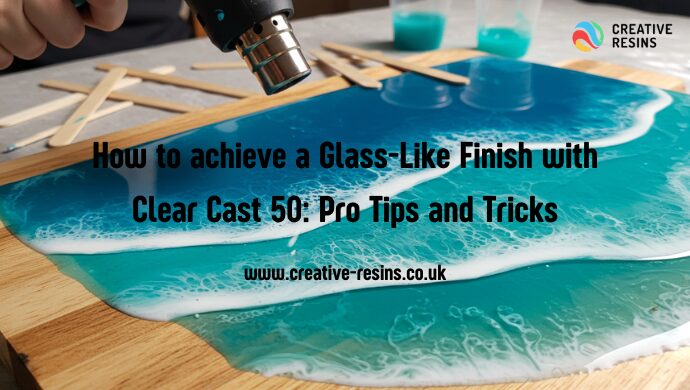
How to achieve a Glass-Like Finish with Clear Cast 50: Pro Tips and Tricks
Achieving a flawless, glass-like finish with casting resins can be a game-changer, whether working on art projects, jewellery making, or even functional items. Clear Cast 50 is a resin that creates a stunning, crystal-clear finish when applied correctly. The perfect glass-like surface not only enhances the appearance of your project but also ensures durability and smoothness that lasts for years.
Achieving this clarity and smoothness is not always as simple as pouring the resin and waiting for it to set. It requires patience, proper technique, and key tricks to avoid imperfections like bubbles, streaks, and uneven surfaces. Let us explore everything you need to know to get the best Clear Cast 50 resin results. From preparation to curing and tips on how to avoid common mistakes, we’ll cover all the crucial steps. Whether you’re a beginner or an experienced crafter, these tips will help you achieve that beautiful, glass-like finish every time.
What is Clear Cast 50 Resin?
CLEAR CAST 50 is a high quality epoxy resin that has a low viscosity allowing for fast air bubble release. It drys water clear and can be cast to a depth of 50mm in a single pour. It will not shrink or crack and can easily have colours or decorative aggregates added to achieve stunning results. is a high-quality epoxy resin popular among artists, crafters, and professionals for its crystal-clear finish. This two-part resin is designed for decorative and functional applications, making it ideal for various projects, from resin art to tabletop coatings. Its unique properties allow it to cure to a glossy, glass-like finish, providing a smooth, durable surface that can withstand everyday wear and tear.
The resin’s self-levelling nature ensures that it spreads evenly across the surface once poured, helping to eliminate imperfections. Clear Cast 50 is known for resisting yellowing, making it an excellent choice for projects that need to maintain clarity over time. You can create professionally finished pieces with an ultra-smooth surface that rivals glass with the proper techniques.
Preparing Your Workspace for Success
Before working with Clear Cast 50, proper preparation is essential to achieving that flawless, glass-like finish. Here’s what you need to do:
1. Choose the Right Environment
Like most resins, Clear Cast 50 requires a controlled environment to achieve the best results. It’s essential to work in a well-ventilated space, ideally between 70°F and 80°F (21°C to 27°C). Temperatures that are too high or too low can affect the curing process, leading to imperfections such as bubbles or sticky surfaces.
Avoid working in humid environments. Excess moisture in the air can cause the resin to cure unevenly, potentially ruining your project. Consider using a dehumidifier if you’re working in an area with high humidity.
2. Gather the Right Tools
To get that perfect finish, you’ll need a few essential tools:
- Measuring cups: Accurate measurements of resin and hardener are crucial for proper curing.
- Stir sticks: Make sure you have disposable stir sticks to mix the resin and hardener.
- Mixing containers: Use clean containers for mixing, as any leftover residue can cause uneven curing.
3. Prepare Your Mould or Surface
If you’re using a mould, ensure it’s clean and free of any debris that might interfere with the curing process. For flat surfaces like tables or countertops, ensure the area is level. Even slight inclines can cause the resin to pool unevenly, affecting the glass-like finish you’re aiming for.
Mixing Clear Cast 50 Resin
One of the most critical steps in achieving a glass-like finish with Clear Cast 50 is ensuring that the resin and hardener are mixed thoroughly. Here’s a step-by-step guide to perfecting your mixing process:
- Accurate Measurements
Clear Cast 50 requires an exact 1:1 ratio of resin to hardener. Using the wrong proportions can result in incomplete curing, sticky surfaces, or cloudy finishes. Measure each component carefully, using separate containers for the resin and hardener, then pour them into a mixing container.
- Thorough Stirring
Once the resin and hardener are in the same container, stir slowly. Stir for about 3 to 5 minutes, scraping the sides and bottom of the container to ensure everything is well incorporated. It’s important to stir slowly to avoid creating air bubbles, which can ruin the smooth, glass-like finish.
- Avoid Over Mixing
While thorough mixing is essential, avoid stirring too aggressively. Over-mixing can introduce bubbles into the resin, which may appear imperfections in your finished product. Stir at a steady pace, and make sure no streaks remain in the mixture.
Pouring the Resin
In the pouring stage, many people make mistakes that result in imperfections in the finished product. Here are the essential tips for pouring Clear Cast 50 to achieve the best glass-like results:
- Pour Slowly and Steadily
When you’re ready to pour, do so slowly and steadily. Avoid splashing or pouring the resin too quickly, as this can cause bubbles. Pour the resin onto the centre of your mould or surface, and let it flow outwards. This helps to minimize the risk of air pockets.
- Control the Pouring Height
Keep the pouring height to a minimum to avoid splashing. Pouring from a low height helps ensure the resin flows smoothly, reducing the chance of bubbles forming.
- Watch for Bubbles
Bubbles are one of the most common issues when working with resin, but they can be easily fixed. After pouring, use a heat gun or torch to pass over the surface of the resin. The heat will cause the bubbles to rise to the surface and pop, leaving a smooth, clear surface behind.
Dealing with Bubbles and Imperfections
No matter how careful you are, bubbles may still appear during the pouring process. Here’s how to handle them:
- Use a Heat Gun or Torch
Once your resin is poured, gently pass over the surface with a heat gun or a small torch. Hold the heat source about 6 to 8 inches from the resin to avoid disturbing it. The heat will cause any trapped air bubbles to rise to the surface and burst, leaving you with a crystal-clear finish.
- Work in Layers
If your project involves pouring thick resin layers, it is often best to do so in multiple stages. Pouring in layers reduces the risk of bubbles forming deep within the resin and ensures that each layer cures appropriately before adding the next.
Curing Time and Handling the Resin
After you’ve poured the resin, it’s essential to give it time to cure correctly. The curing time for Clear Cast 50 typically takes 24 to 48 hours, depending on the thickness of the pour and the room’s temperature. It’s crucial to avoid touching or disturbing the resin during this time to prevent fingerprints or other imperfections.
- Let it set
Once your resin is poured, allow it to set undisturbed for at least 24 hours. The resin will begin to cure and solidify, achieving that beautiful glass-like finish. If you’re working on a larger project, you may need to wait longer for the resin to set fully.
- Sanding and Polishing (If Needed)
In some cases, after the resin has fully cured, you may need to sand and polish the surface to remove any minor imperfections. Start with a fine-grit sandpaper and gradually move to a higher grit for a smooth, polished surface. After sanding, use a polishing compound to restore the glass-like finish.
Common Mistakes to Avoid
To ensure you achieve a glass-like finish with Clear Cast 50, here are some common mistakes to avoid:
- Incorrect measurements: Not using the exact 1:1 ratio can lead to incomplete curing.
- Mixing too quickly: Stirring too fast can create air bubbles, which ruin the finish.
- Not using a level surface: A slight incline can cause the resin to pool unevenly.
- Premature handling: Touching the resin before it is cured can leave marks or fingerprints.
Conclusion
Achieving a glass-like finish with Clear Cast 50 resin is entirely possible with the proper techniques and a bit of patience. You can create stunning pieces with a clear, smooth surface by ensuring proper preparation, mixing, pouring, and curing. Whether you’re creating jewellery, artwork, or functional items, these pro tips will help you avoid common mistakes and achieve the flawless results you’re aiming for.
If you’re ready to start with Clear Cast 50, want to learn more about the resin, or need assistance with your next project, request a quote today. Our experts are here to guide you through the process and ensure you achieve that perfect finish every time!
We at Creative Resins offer superior clear-cast resins at the best prices. Call us now! – 01795 411820
A Comprehensive Guide to Different Types of Surface Coatings Comparison
Surface coatings are crucial in improving various materials’ functionality and aesthetics across multiple industries. These coatings are essential in everyday applications, from protecting surfaces from environmental damage to providing decorative finishes. Whether you’re a homeowner looking to spruce up your living space or a professional contractor seeking the best products for a project, understanding the different types of surface coatings available is vital. Let us see five common types of surface coatings: Glass Paint, Door & Window Paint, Metal Paint, Floor Paint, and Aerosol Paint. These coatings have unique properties, applications, and advantages that cater to specific needs. Whether you’re painting furniture, refreshing your home’s exterior, or coating industrial floors, knowing which type of paint to use can significantly impact the outcome.
Let’s explore each type of surface coating in detail to help you choose the right one for your needs.
Types of Surface Coatings
Glass Paint
Glass paint is formulated explicitly on glass surfaces and is available in various colours and finishes. These paints are typically made from acrylics or enamels that adhere well to glass while providing a durable finish. One of the critical features of glass paint is its transparency; many products allow light to pass through while adding colour or design to the surface.
Applications: Glass paint is commonly used for decorative purposes on windows, glassware, and art projects. It can be used to create stained glass effects or to paint designs on vases and other decorative items. Because of its versatility and ease of use, glass paint is often utilized in craft projects.
Durability: When properly cured, glass paint can be durable and resistant to chipping and fading. Many formulations are also weather-resistant, making them suitable for outdoor applications.
Door & Window Paint
Door and window paint is designed for wooden or metal doors and frames. It comes in oil-based and water-based formulations.
Composition: Oil-based paints provide a smoother finish and better durability against the elements but may have higher VOC levels. Water-based paints are effortless to clean up and have lower VOC emissions but may require more frequent reapplication.
Durability Features: High-quality door and window paints resist weathering, UV light, and moisture. They are formulated to withstand the rigours of daily use while maintaining their appearance over time.
Applications: These paints are ideal for both interior and exterior use. They can be used on front doors, patio doors, window frames, and shutters.
Metal Paint
Metal paint protects metal surfaces from rust and corrosion and provides an attractive finish. Several types of metal paint are available, including epoxy, polyurethane, and enamel options.
Types of Metal Paints:
- Epoxy Paints: Known for their exceptional adhesion and chemical resistance, epoxy paints are ideal for industrial applications.
- Polyurethane Paints: These provide a tough finish that resists scratches and UV light.
- Enamel Paints: Often used for decorative purposes due to their glossy finish.
Corrosion Resistance: Metal paints often contain rust-inhibiting properties that help safeguard against corrosion caused by moisture and chemicals. This makes them suitable in harsh environments such as marine settings or industrial facilities.
Applications: Metal paints are commonly used on fences, machinery, vehicles, and metal structures.
Floor Paint
Floor paint is designed specifically for coating floors in residential or commercial settings. Depending on the intended use, it comes in various formulations.
Composition and Characteristics: Epoxy floor coatings are popular due to their durability, resistance to chemicals, and abrasion. They create a hard surface that can withstand heavy foot traffic.
Applications: Floor paint is used in garages, warehouses, retail spaces, and residential living areas. It can also be used outdoors on patios or walkways.
Slip Resistance: Many floor paints have added slip-resistant properties to ensure safety in high-traffic areas or environments prone to spills.
Aerosol Paint
Aerosol paint offers convenience and versatility for various DIY projects. Packaged in spray cans, aerosol paint allows easy application without brushes or rollers.
- Convenience and Versatility: Aerosol cans’ portability makes them ideal for quick touch-ups or small projects. They are also available in various colours and finishes (matte, gloss) and are suitable for crafts or automotive applications.
- Types Available: Aerosol paints can be formulated for specific surfaces such as wood, metal, plastic, or fabric. This versatility makes them popular among hobbyists and professionals alike.
Want to Know More? Check the Differences in Our Blog on Surface Coatings!
Comparison Criteria
When comparing different types of surface coatings like Glass Paint, Door & Window Paint, Metal Paint, Floor Paint, and Aerosol Paint, several criteria should be considered:
Durability and Resistance
Durability is one of the most critical factors when selecting a surface coating:
- Glass Paint: It is durable.
- Door & Window Paint: Offers excellent weather resistance; high-quality options last several years without peeling.
- Metal Paint: Highly durable with strong corrosion resistance; ideal for outdoor metal surfaces.
- Floor Paint: Extremely durable with good abrasion resistance; epoxy options last longer under heavy traffic.
- Aerosol Paint: Aerosol paint offers excellent resistance to UV rays, moisture, and abrasion, significantly enhancing the durability of the coated surface.
Application Methods
The method of application can influence the ease of use:
- Glass Paint: Typically applied with brushes or sponges; requires careful handling.
- Door & Window Paint: This can be applied with brushes or rollers; oil-based versions may require more skill.
- Metal Paint: Often sprayed on for even coverage; some may also be brushed.
- Floor Paint: Usually rolled out; some products may require two coats.
- Aerosol Paint: Sprayed directly from the can; very user-friendly but requires proper ventilation during application.
Cost Effectiveness
Cost considerations vary based on the type of coating:
- Glass Paint: Generally affordable but may require multiple coats depending on opacity.
- Door & Window Paint: Mid-range pricing; quality matters significantly regarding longevity.
- Metal Paint: Costs vary widely based on formulation; epoxy options tend to be pricier but offer long-term savings through durability.
- Floor Paint: This may have higher initial costs but saves money over time due to reduced maintenance needs.
- Aerosol Paint: Aerosol Paint is often inexpensive but may not cover as large an area as other types; it is best suited for smaller projects.
Performance Analysis
To further understand how these coatings perform under various conditions:
Adhesion Tests
Adhesion tests evaluate how well each coating bonds to its substrate:
- Glass Paint: Good adhesion when adequately cured.
- Door & Window Paint: High adhesion levels are crucial due to exposure; quality products from Creative Resins stick well.
- Metal Paint: Excellent adhesion properties; epoxy formulations bond exceptionally well.
- Floor Paint: Strong adhesion is essential.
- Aerosol Paint: When applied to properly prepared surfaces, it demonstrates strong adhesion properties.
Choosing the Right Surface Coating
Selecting the suitable surface coating involves considering specific needs:
Application-Specific Considerations
Think about where you will apply the coating:
- For indoor decorative items (like vases), glass paint works best.
- For exterior doors exposed to weather elements regularly—opt for high-quality door & window paint.
- If protecting outdoor metal structures from rusting—metal paint is essential.
- For garage floors needing durability—floor paint provides long-lasting protection.
- Choose aerosol spray paints for various surfaces for quick touch-ups around the house.
Conclusion
In summary, understanding the characteristics of different types of surface coatings—Glass Paint, Door & Window Paint, Metal Paint, Floor Paint, and Aerosol Paint—can significantly influence your project’s success. Each type has unique properties suited for specific applications ranging from decorative finishes on glass items to protective layers on metal surfaces exposed outdoors. When selecting a coating type, consider factors like durability against environmental conditions and ease of use during application processes—this will ensure long-lasting results tailored perfectly towards individual needs, whether they involve home improvement tasks or industrial applications!.
We at Creative Resins offer superior-quality Surface Coatings at the best prices. Call us now! – 01795 411820